Scroll through time.

Learn your history.

Open timeline menu
Timeline Menu
Navigate the timeline

Father Of Mankind

Adam عليه السلام, created from clay, was the first man. Adam and his wife, Hawaa, mark the beginning of humanity.

Adam
آدم/ Adam
Prophet
Father Of Mankind

Adam عليه السلام, created from clay, was the first man. Adam and his wife, Hawaa, mark the beginning of humanity.

Lesson 1 image

Mankind

A New Creation

The Angels are concerned about the new creation. Allah creates the first human being, Adam , and teaches him the names of all things. Upon seeing Adam , Iblis becomes arrogant and disobedient.


Lesson 2 image

Adam

Father to Mankind

Adam is the father of mankind. Allah brings forth all of Adam's children, who bear witness that Allah is the Lord of everything.

Lesson 3 image

Adam & Hawaa

The Parents to Mankind

Allah creates a companion for Adam named Hawwa (Eve). Iblis deceives Adam into eating from the forbidden tree, leading to Adam's regret for his actions, and he seeks forgiveness through Tawbah (repentance).

Lesson 4 image

Adam’s Sons

Habil and Qabil

Qabil harbours jealousy towards his brother Habil. A sacrifice is sought to solve a matter but intensifies when his own sacrifice is rejected while Habil's is accepted.

Lesson 5 image

A Murder

The Death of Habil

Qabil commits the first murder among mankind by killing his brother Habil. After the act, Qabil experiences feelings of regret and remorse but is uncertain about what steps to take next.
Lesson 6 image

Angels Visit

Death of Adam

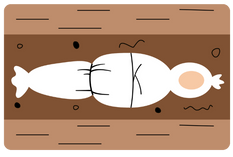
Adam’s life is extended. Adam , like other prophets and messengers, is given the option to live longer. Adam dies and angels are sent by Allah to meet Adam’s sons who conduct Adam’s funeral.

Habil & Qabil
هابيل وقابيل/ Abel & Cain
Mentioned in Quran or Hadith

Habil and Qabil were the sons of Prophet Adam. Qabil's jealousy led him to murder Habil out of envy for Allah's acceptance of Habil's sacrifice, marking the first act of murder in human history.

Habil & Qabil
هابيل وقابيل/ Abel & Cain
Mentioned in Quran or Hadith

Habil and Qabil were the sons of Prophet Adam. Qabil's jealousy led him to murder Habil out of envy for Allah's acceptance of Habil's sacrifice, marking the first act of murder in human history.

Allah gifted Prophet Adam with a son, Sheeth, after the tragic loss of Habil. Sheeth's عليه السلام righteousness and dedication to Tawheed (monotheism) ensured continued guidance for mankind.

Sheeth
شيث / Seth
Prophet

Allah gifted Prophet Adam with a son, Sheeth, after the tragic loss of Habil. Sheeth's عليه السلام righteousness and dedication to Tawheed (monotheism) ensured continued guidance for mankind.

Enos
أنوش/ Enos
Prophet

The son of Prophet Seeth and the grandson of Prophet Adam. Enos عليه السلام continued the legacy of his forefathers, preaching monotheism and righteousness to his people.

Lesson 2 image

Birth and Family

Prophet Sheeth was the third son of Prophet Adam and Hawwa (Eve), born after the death of his brother Habil (Abel).

Lesson 3 image

Name and Meaning

The name "Sheeth" means "Gift from Allah" because he was born after the tragic loss of Habil.

Lesson 4 image

Teachings

His father taught him the hours of the days and night and the act of worship to be performed in those hours.

Lesson 5 image

Leadership

Sheeth was chosen by Allah to lead the descendants of Adam. He was known for his piety, righteousness, and devotion to Allah.

Lesson 6 image

Revelation

Allah revealed fifty scrolls (Suhuf) to Sheeth, containing guidance and laws for his people. He received divine guidance to lead his people and maintain the monotheistic teachings passed down from Adam .


Enos
أنوش/ Enos
Prophet

The son of Prophet Seeth and the grandson of Prophet Adam. Enos عليه السلام continued the legacy of his forefathers, preaching monotheism and righteousness to his people.

Kenan
كِنَاْنْ/ Cainan
Prophet
Mahalalil
مهلالئيل/ Mahalalel
Prophet

Mahalalil عليه السلام is the son of Kenan (Cainan) and the father of Yared (Jared).

Mahalalil
مهلالئيل/ Mahalalel
Prophet

Mahalalil عليه السلام is the son of Kenan (Cainan) and the father of Yared (Jared).

Yared
يارد/ Jared
Prophet
Idris
إدريس/ Enoch
Prophet
A Prophet of Knowledge

Idris عليه السلام was a prophet and messenger of Allah, known for his righteousness and knowledge.

Idris
إدريس/ Enoch
Prophet
A Prophet of Knowledge

Idris عليه السلام was a prophet and messenger of Allah, known for his righteousness and knowledge.

Lesson 1 image

The Lineage of a Prophet

From Adam to Nuh – A Legacy of Piety

Prophet Idris descended from Sheeth , the son of Adam , and is considered the great-grandfather of Prophet Nuh . He lived among the early generations of mankind and was the first prophet sent after Sheeth, continuing the message of Tawheed. His noble ancestry set the foundation for his elevated status.

Lesson 2 image

The Divine Appointment

Chosen by Allah for His Truthfulness

Allah describes Idris in the Qur’an as a Prophet and a man of truth. His honesty, firm belief, and righteous conduct made him worthy of being chosen as a Messenger to guide his people in a time of moral decline. His mission was to call others to sincerity and obedience to Allah.

Lesson 3 image

A Pioneer of Knowledge

Writing, Stitching, and the Stars

Idris was the first human to write with a pen, sew garments, and study celestial movements. He embodied the fusion of revelation and intellect, leading humanity in both spiritual and practical advancements. His contributions laid the groundwork for literacy and structured life.

Lesson 4 image

The Prophet Who Sought More Reward

Sincere Ambition Met with a Heavenly End

Driven by a powerful desire to increase his reward, Idris asked a close angelic companion to take him to the heavens so he might perform even more virtuous deeds. His sincerity and ambition reflect a heart consumed with the love of righteousness and a yearning for Allah’s pleasure.

Lesson 5 image

Enrolled in Divine Mercy

Among the Best of the Patient Ones

Allah counted Idris among the Sabireen (the patient) and admitted him into His Mercy. His steadfastness and righteousness in times of trial earned him an everlasting place among the elite mentioned in the Qur'an—those who are examples for all believers.

Adam عليه السلام died 308 years after the birth of Idris.

Adam's Death

Adam عليه السلام died 308 years after the birth of Idris, marking the end of the first human and prophet's earthly life.

Nuh
نوح/ Noah
Prophet
First Messenger to Mankind

Nuh عليه السلام, the first messenger sent to mankind, was commanded by Allah to call the people back to righteousness. With steadfastness and resilience, he called his people for 950 years, employing various methods to abandon shirk and return to Tawheed.

Nuh
نوح/ Noah
Prophet
First Messenger to Mankind

Nuh عليه السلام, the first messenger sent to mankind, was commanded by Allah to call the people back to righteousness. With steadfastness and resilience, he called his people for 950 years, employing various methods to abandon shirk and return to Tawheed.

Lesson 1 image

THE PEOPLE OF NUH

The generation between Adam and Nuh adhered to the belief in the oneness of Allah following the Sharee’ah. However, over time, deviation from monotheism emerged and the spread of shirk accelerated. Influenced by shaytaan’s whispers and deception, shaytan began corrupting the people’s belief by encouraging them to visit the graves of righteous individuals, constructing statues in remembrance of them and, subsequently worshiping them alongside Allah.

Lesson 2 image

NUH : A WARNER AND ADVISER

Nuh, the first messenger sent to mankind has been commanded by Allah to call the people back to righteousness. Nuh, upon steadfastness and resilience, calls his people for 950 years employing various methods to his people to abandon shirk and return back to Tawheed.

Despite his sincere advice and warning, Nuh (AS) was faced with severe opposition from his people.

Lesson 3 image

NUH'S DUA TO ALLAH

As the situation with his people grew increasingly dire, Allah revealed to Prophet Nuh that none among his people who hadn’t believed now, would not be saved.

In response to this revelation, Nuh fervently supplicated to Allah, day and night seeking his aid and assistance.

Lesson 4 image

BUILDING OF THE ARK

Upon granting Nuh's request, Allah ordered Nuh (AS) to construct an Ark and to embark upon it with those who believed and with each kind of animal, male and female.

While constructing the Ark, Nuh was met with mockery and ridicule from his people; however, he still remained steadfast carrying out the commands of Allah.

Lesson 5 image

ALLAH’S PUNISHMENT UPON THE PEOPLE OF NUH

Allah sent his divine punishment upon the people of Nuh (AS). In the face of the impending flood, the people of Nuh sought to flee for safety but as the floodwater gushed forth from the earth, and poured from the heavens, the rain engulfed the land and submerged everything in its path.

Allah’s decree was fulfilled and the disbelievers from the people of Nuh were destroyed. There were no survivors that day.

Despites Nuh's earnest efforts calling his people back to Tawheed, among those who were destroyed with the disbelievers were Nuh's wife and his son.

Lesson 6 image

GENERATION AFTER THE PROPHET NUH

After the flood subsided and Nuh and those who were on the Ark with him were saved, Allah caused the idols to be buried.

Nuh continued to advise and warn his people on being upon the obedience of Allah and to be weary of the trials of this world.


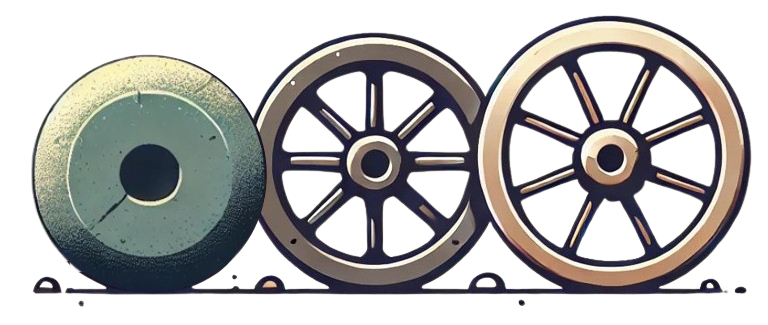
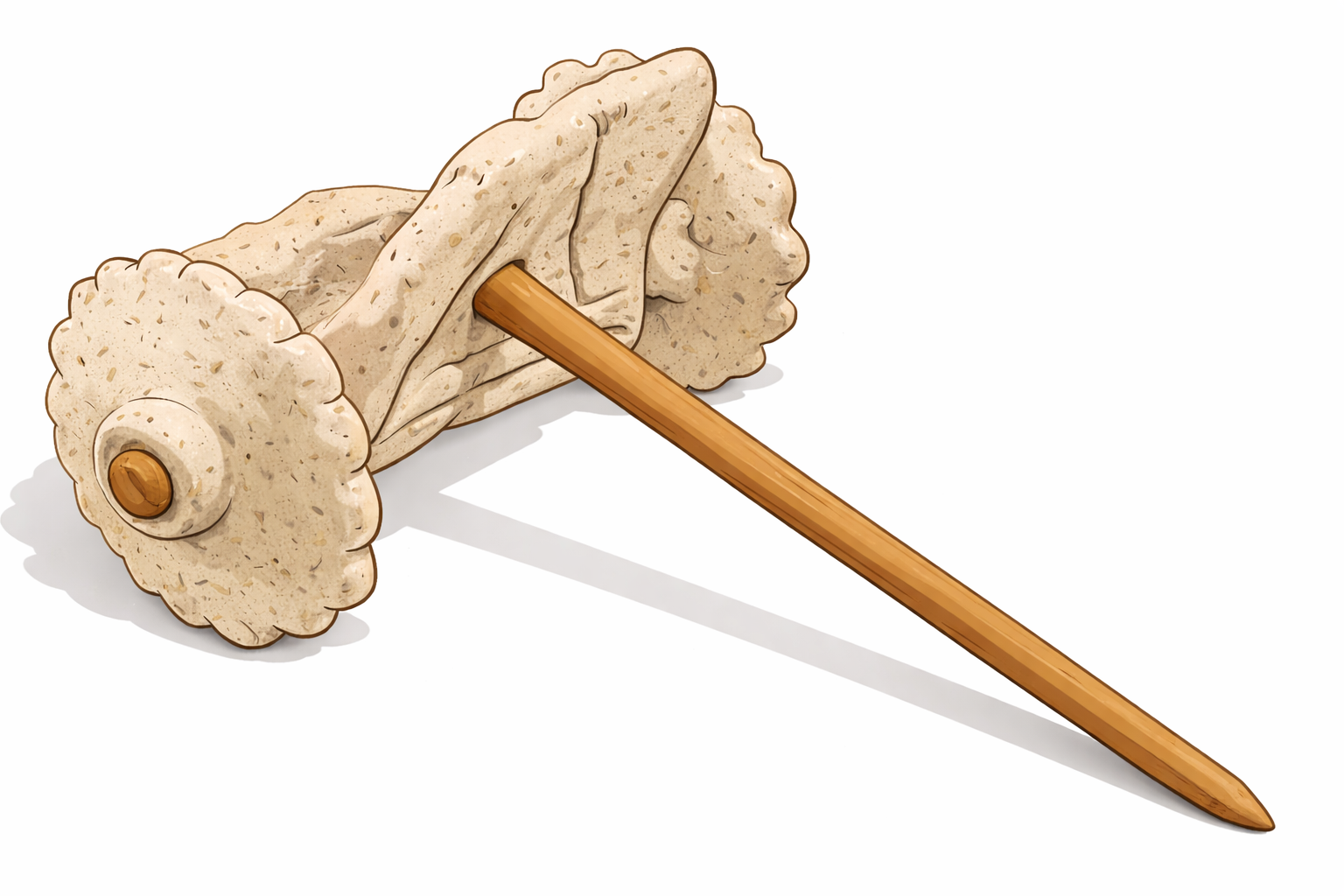
The invention of the wheel
3500 BCE
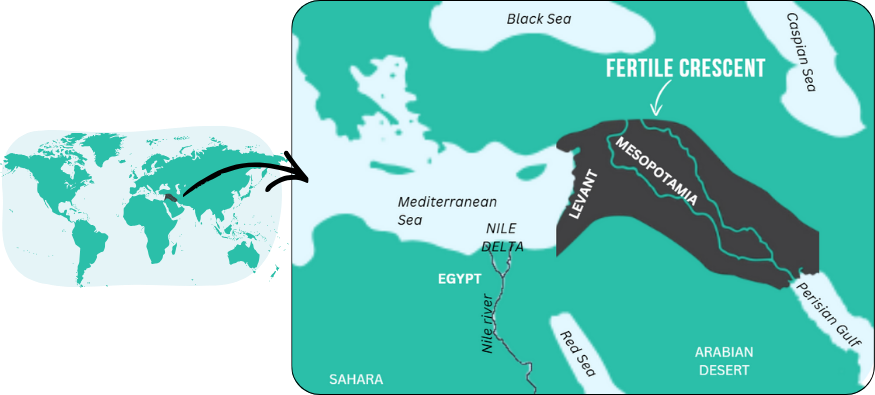
Mesopotamia
The wheel is invented
invention
Explore Mesopotamia +
The invention of the wheel
3500 - 3000 BCE
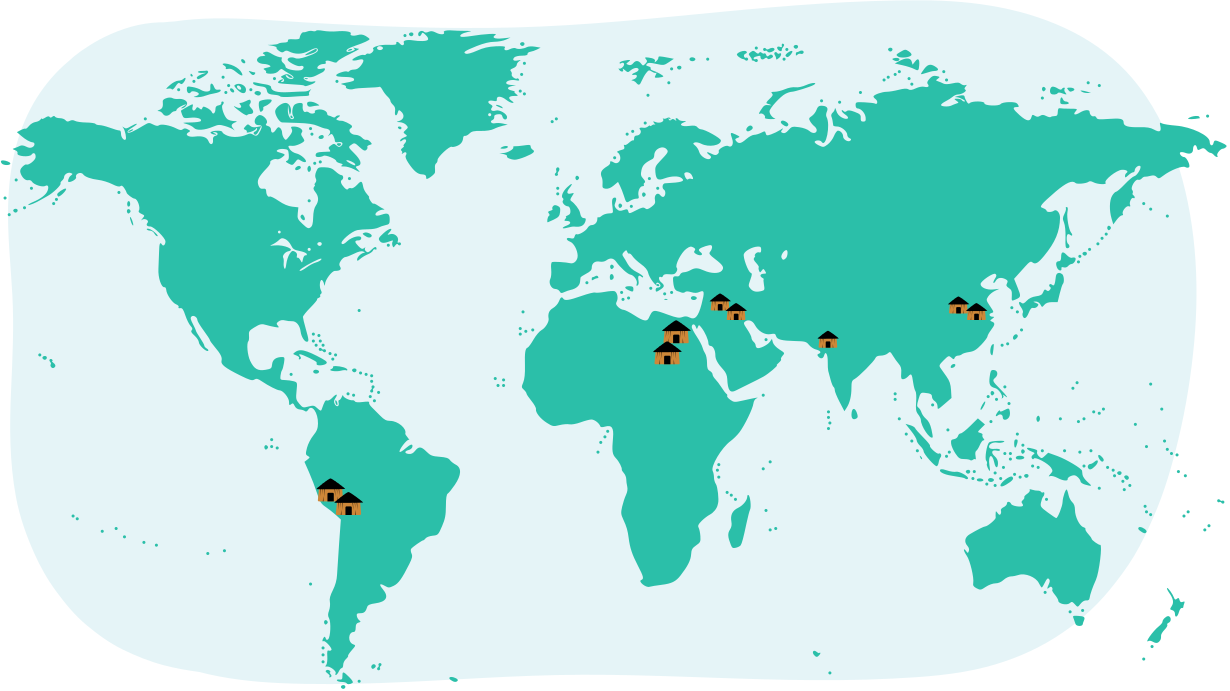
The First Cities
Civilisation
Explore the First civilisations +
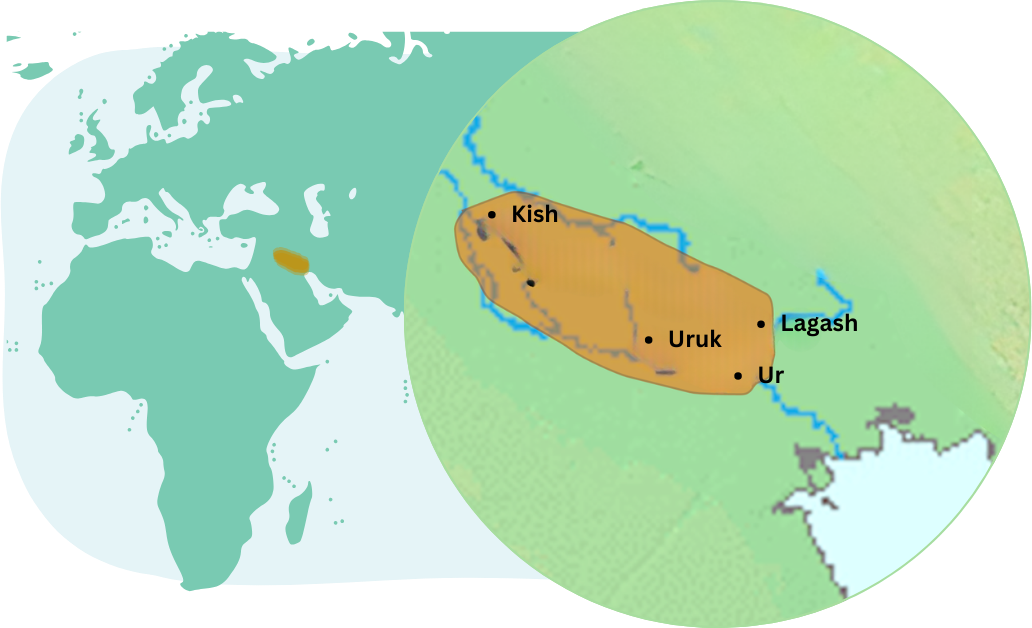
The first cities
3500 - 3000 BCE
The First Cities
Civlilisation
Explore the First civilisations +
The first cities
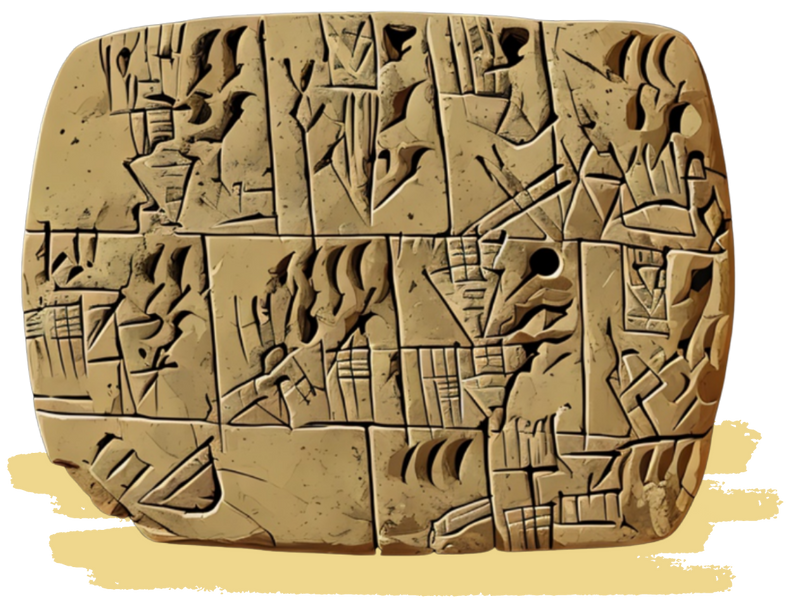
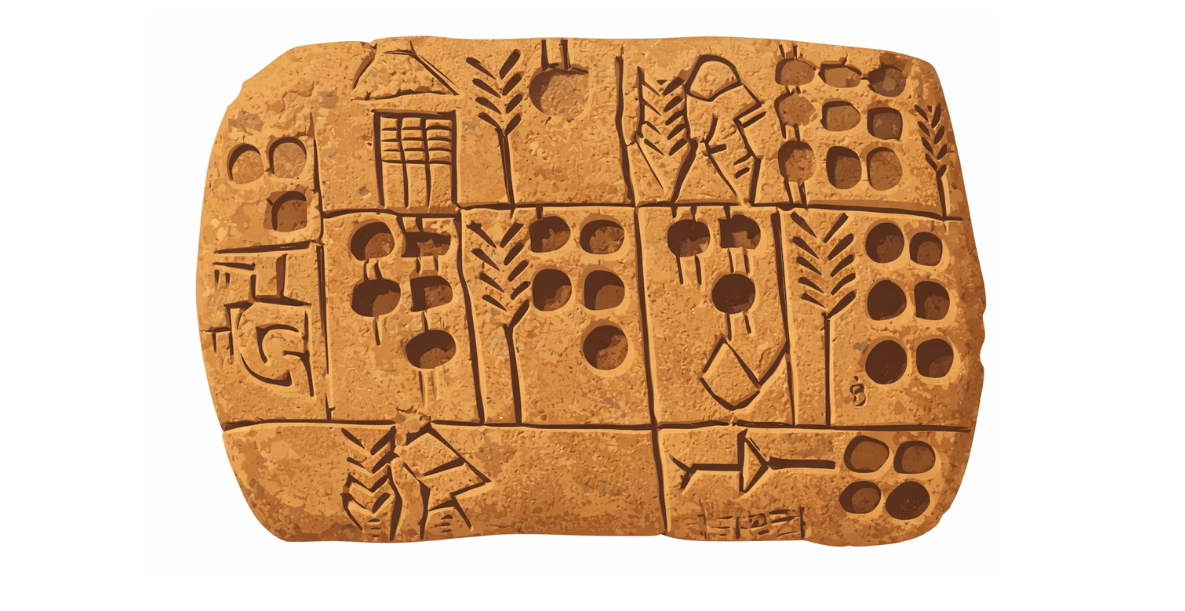
The earliest form of cuneiform script
3100 BCE
The earliest form of cuneiform script is used
Invention
Explore the First Writings +
The earliest form of cuneiform script
3100 BCE
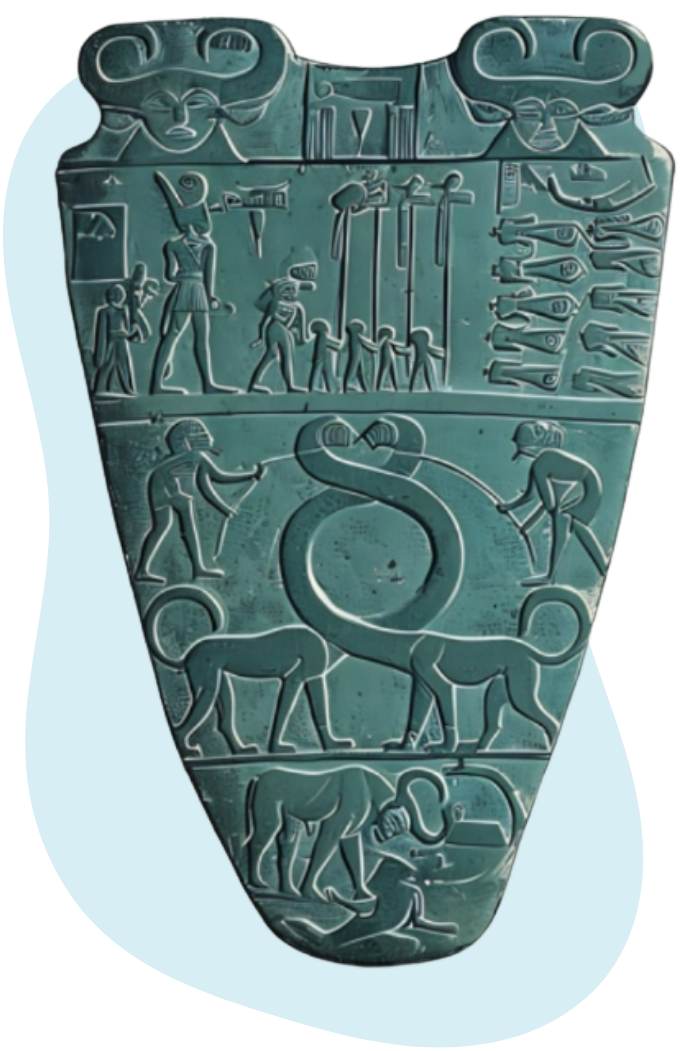
King Narmer unites Upper and Lower Egypt
Civilisation
Explore the First Civilisations +
Explore Egypt of the Pharaohs +
King Narmer unites Upper and Lower Egypt
3100 BCE
King Narmer unites Upper and Lower Egypt
Civilisation
Explore the First Civilisations +
Explore Egypt of the Pharaohs +
King Narmer unites Upper and Lower Egypt

c.2600 BCE
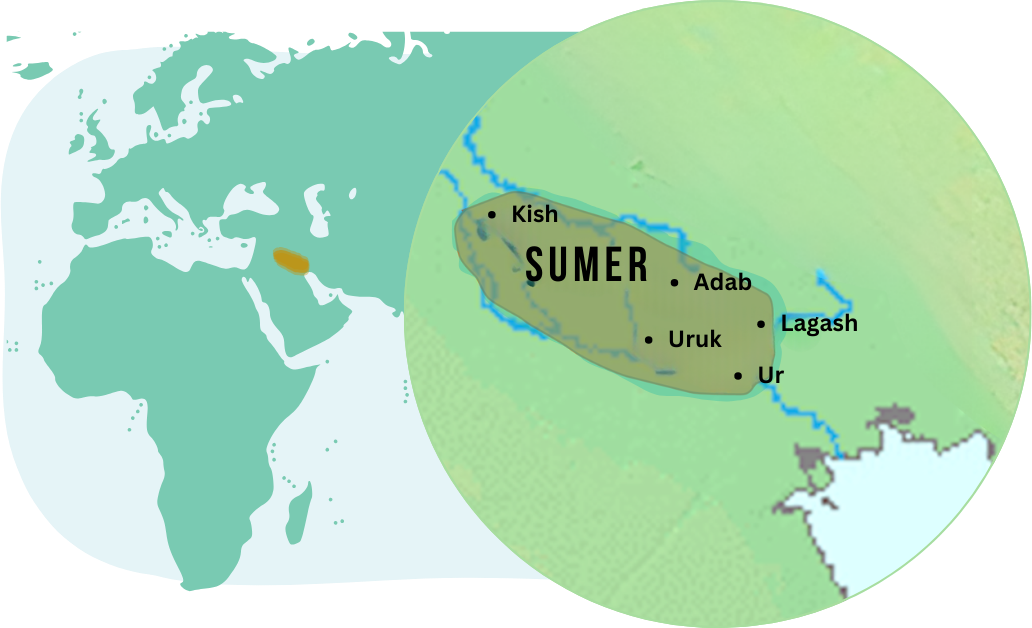
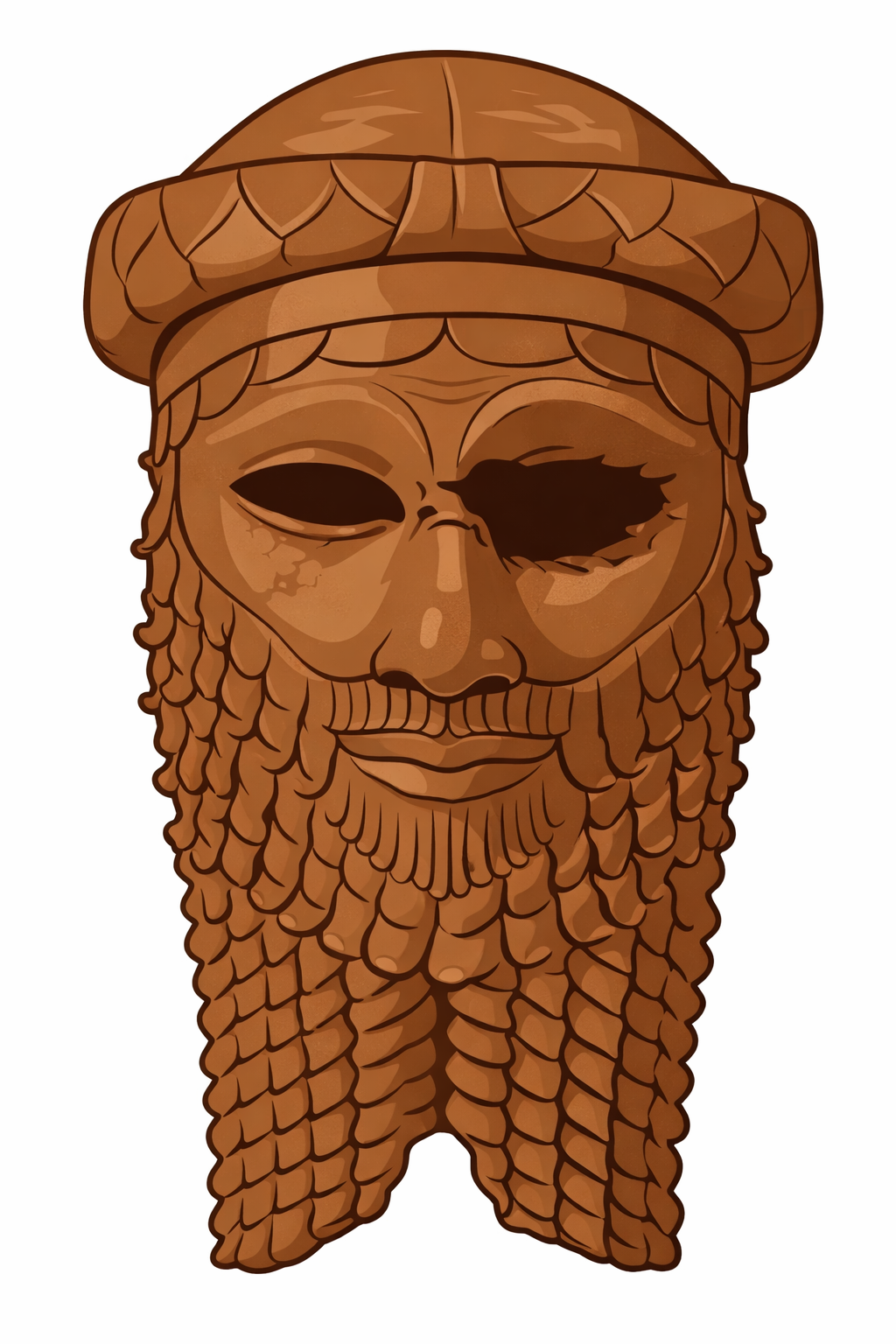
King Sargon of Akkad unites Sumerian cities to create the world's first empire
invention
Explore Mesopotamia +
Hud
هود/ Herber
Prophet

Prophet Hud عليه السلام was sent to the tribe of Ad to call them to worship Allah alone and abandon idols. Despite his warnings about the Day of Judgement and calls for repentance, they mocked him and remained arrogant. Trusting their wealth, they rejected his message. Allah then destroyed them with a violent windstorm, saving only Hud and the believers.

Hud
هود/ Erber
Prophet

Prophet Hud عليه السلام was sent to the tribe of Ad to call them to worship Allah alone and abandon idols. Despite his warnings about the Day of Judgement and calls for repentance, they mocked him and remained arrogant. Trusting their wealth, they rejected his message. Allah then destroyed them with a violent windstorm, saving only Hud and the believers.

Lesson 1 image

THE PEOPLE OF AD

THEIR LAND AND REPUTATION

The Ad tribe lived in Yemen in the desert in a region between Hadramout and Oman. They were renowned for their great physical stature and the grand buildings they constructed.

Despite their power, Ad were a disbelieving people; they were unjust and worshipped idols.

Lesson 2 image

HUD

A MESSENGER FROM THEIR OWN TRIBE

Prophet Hud called them to reject idol worship and acknowledge Allah as the only true God. However, despite his efforts, the leaders of the tribe ridiculed him, accusing him of foolishness and dishonesty.

Lesson 3 image

HUD'S APPEAL TO HIS PEOPLE

A CALL FOR MONOTHEISM

Prophet Hud urged his people to worship Allah alone, reminding them of the blessings they had received. He questioned their logic in worshipping idols crafted by their own hands and emphasised that Allah was the source of life and death, and the only one worthy of worship. He gave the clear message: return to monotheism and leave behind falsehood.

Lesson 4 image

HUD EXPLAINS THE DAY OF JUDGEMENT

THE REALITY OF ACCOUNTABILITY

Prophet Hud warned the Ad of the Day of Judgement, when every soul would be resurrected and held accountable. The people of Ad mocked him, refusing to accept the idea of resurrection.

The people of Ad remained stubborn in their disbelief, mocking Prophet Hud’s message and rejecting the idea of a life after death. They viewed him as just another man like themselves, someone unworthy of divine authority. Despite their wealth and material success, they could not see beyond their arrogance and materialistic pursuits.

Lesson 5 image

HUD WARNS HIS PEOPLE

A FINAL PLEA FOR REPENTANCE

Hud continued to warn his people of Allah’s impending punishment, urging them to seek forgiveness and repent. However, the people of Ad remained defiant, insisting that their wealth and towering structures would protect them. They refused to believe that Hud was a messenger and dismissed his warnings, daring him to bring the punishment he spoke of.

Lesson 6 image

THE PUNISHMENT

DESTRUCTION OF THE PEOPLE OF AD TRIBE

Allah sent a severe drought and, later, a violent windstorm destroyed the Ad. The storm, which lasted eight days and seven nights, reducing everything to ruins. Only Prophet Hud and a few believers were saved, while the rest of the Ad were completely obliterated as a sign of Allah’s power and justice.

c.2600 BCE
The cities of Mohenjo Daro and Harappa are founded
Civilisation
Explore the History of India +
c.2500 BCE
Earliest use of the Indus Script is seen
Invention
Explore First Writings +
Explore The History of India +
c.2500 BCE
Earliest use of the Indus Script is seen
Invention
Explore First Writings +
Explore The History of India +
2000–1450 BCE
The Minoan civilisation spreads from Crete through the Aegean
Migration
Explore the First civilisations +
Explore Bronze Age Mediterranian +
The Minoan civilisation spreads from Crete through the Aegean
2000–1450 BCE
The Minoan civilisation spreads from Crete through the Aegean
Migration
Explore the First civilisations +
Explore Bronze Age Mediterranian +
The Minoan civilisation spreads from Crete through the Aegean
2000 BCE
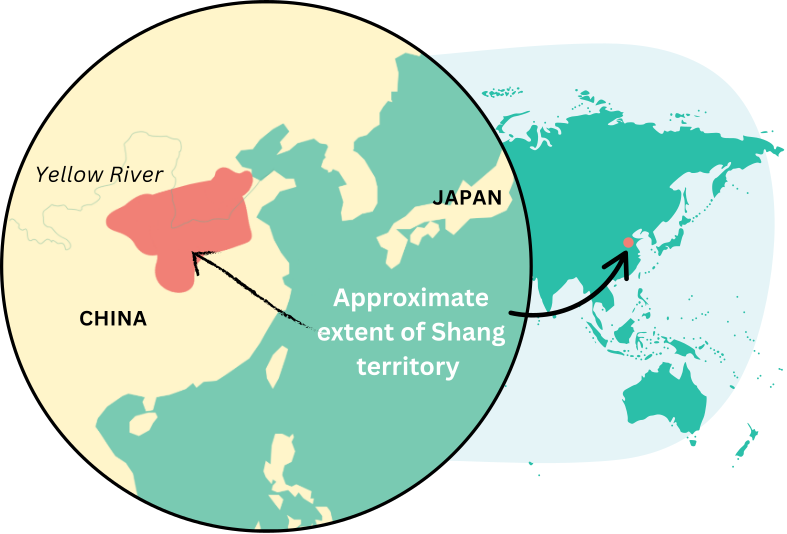
Bronze casting is practised by the Erlitu culture on the Yellow River
Invention
Explore Bronze Age China +

Allah sent Prophet Salih عليه السلام to guide the people of Thamud. The people of Thamud demanded Prophet Salih show a miracle, and Allah sent a miraculous she-camel from a rock. They rejected it and killed the camel despite warnings. Ignoring calls to repent, Thamud faced destruction by a devastating blast and earthquake.

Salih
صالح
Prophet

Allah sent Prophet Salih عليه السلام to guide the people of Thamud. The people of Thamud demanded Prophet Salih show a miracle, and Allah sent a miraculous she-camel from a rock. They rejected it and killed the camel despite warnings. Ignoring calls to repent, Thamud faced destruction by a devastating blast and earthquake.

Lesson 1 image

THE PEOPLE OF THAMUD

WEALTH AND POWER

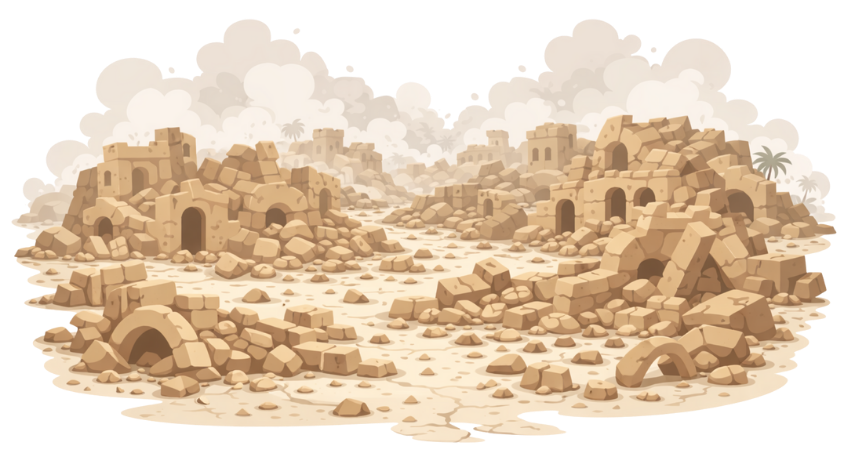
After the people of Ad were destroyed, the tribe of Thamud rose to power and wealth. However, as they grew richer, they also became more corrupt. They built impressive buildings and carved homes from the hills, but their moral values declined, and evil rulers took control of the land.

Lesson 5 image

SALIH

A PROPHET WHO CALLED FOR CHANGE

Allah sent Prophet Salih to guide the people of Thamud. Salih was respected for his wisdom and goodness. He urged his people to worship Allah alone and abandon their idols. While a few believed him, most people refused to listen and made fun of him. They were confused by his message and didn't want to leave the gods their ancestors had worshipped.
Lesson 3 image

THE MIRACLE OF THE SHE-CAMEL

A SIGN FROM ALLAH

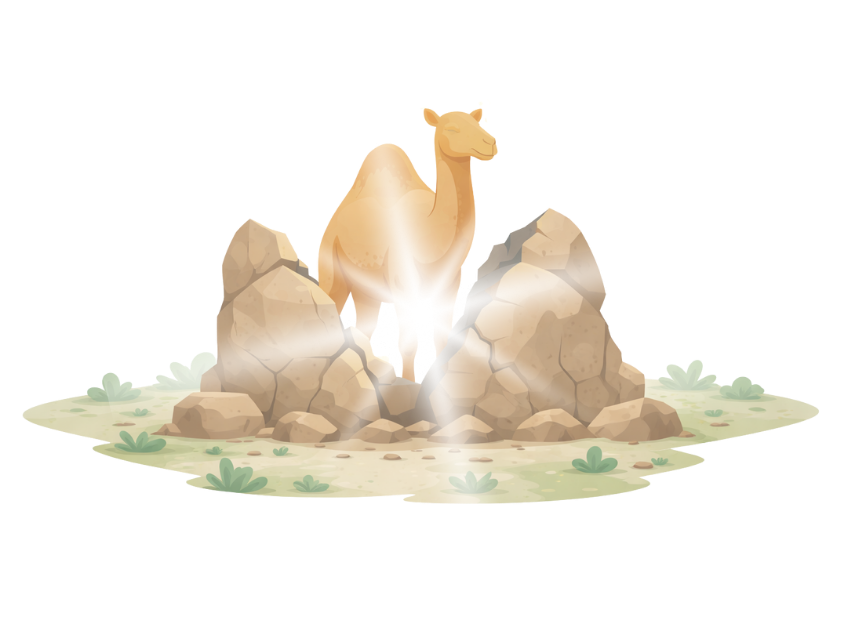
The people of Thamud asked Salih for a miracle to prove he was a prophet. In response, Allah made a huge, unique she-camel appear from a rock, just as they had demanded. This was a clear sign from Allah, and some people believed after seeing it. However, many continued to reject Salih and became to resent the camel, even though it provided them with milk and was a blessing.

Lesson 4 image

THE KILLING OF THE SHE-CAMEL

A DANGEROUS REBELLION

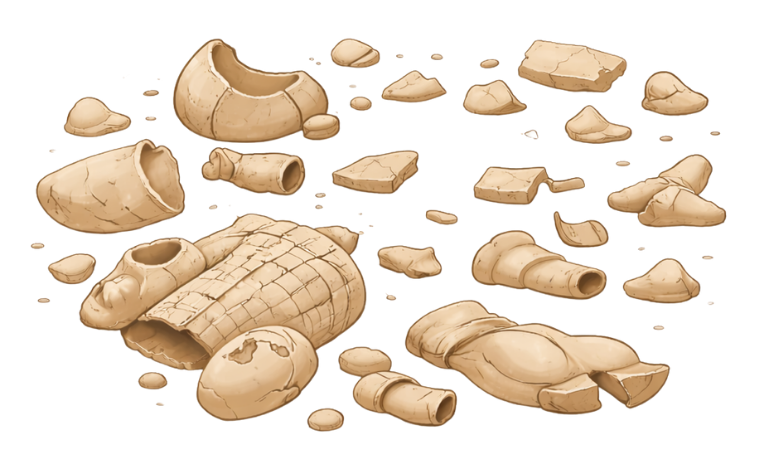
Salih warned them not to harm the she-camel, however, the people of Thamud secretly plotted to kill it.

Influenced by their leaders and tempted by rewards, several men killed the camel. They celebrated their act and mocked Salih. Prophet Sailh warned them that Allah’s punishment would come in three days if they didn’t repent, but they ignored his warning.
Lesson 5 image

THE DESTRUCTION OF THAMUD

THE CONSEQUENCE OF DISOBEDIENCE

Three days after the camel was killed, Allah sent a punishment of a Blast from the sky and a violent earthquake. The entire tribe of Thamud was destroyed, except for those who had believed and left.

1900 BCE
Construction of the Temple of Karnak at Thebes in Egypt begins
Culture
Construction of the Temple of Karnak at Thebes in Egypt begins
1900 BCE
Construction of the Temple of Karnak at Thebes in Egypt begins
Culture
Construction of the Temple of Karnak at Thebes in Egypt begins
1800 BCE
Climate change begins to affect the Indus Valley region
Environment
1800-1700 BCE
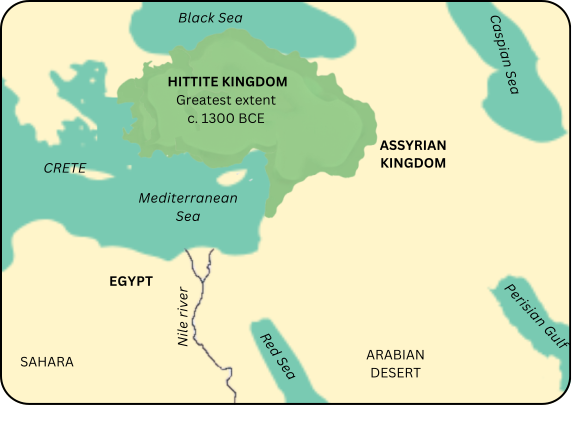
The Hittites (in the region Asia Minor; modern-day Turkey) begin working with iron, and by around 1500 BCE, pioneering large-scale iron smelting and forging, sparking the Iron Age.
Technology
Explore the Iron Age +
1800-1700 BCE
The Hittites (in the region Asia Minor; modern-day Turkey) begin working with iron, and by around 1500 BCE, pioneering large-scale iron smelting and forging, sparking the Iron Age.
Technology
Explore the Iron Age +
Hittite iron smelting
1800 BCE
Iron objects are produced in the regions of Uttar Pradesh and Malabar in India
Technology
Explore the Iron Age +

Prophet Ibrahim عليه السلام challenged the prevalent polytheistic beliefs of his society and endured numerous trials and tests throughout his life, including facing persecution from his own family and community, being thrown into a fire, and being commanded to sacrifice his son.

Ibrahim
إبراهيم/ Abraham
Prophet

Prophet Ibrahim عليه السلام challenged the prevalent polytheistic beliefs of his society and endured numerous trials and tests throughout his life, including facing persecution from his own family and community, being thrown into a fire, and being commanded to sacrifice his son.

Lesson 1 image

Introduction to Prophet Ibrahim

The Father of the Prophets

Prophet Ibrahim is introduced as one of the greatest prophets in Islam, known for his devotion to Tawheed (monotheism) and his title as "Khalilullah" (the close friend of Allah). His life marks a pivotal moment in history as he is the forefather of both the Arab and Israelite prophets, including Prophet Muhammad ﷺ. His role in spreading the message of monotheism is unparalleled, and his story serves as an example for all believers.
Lesson 2 image

Ibrahim's Early Life

Growing Up in a Society of Idol Worship

Ibrahim grew up in a society entrenched in idol worship, yet he was deeply disturbed by the practice from an early age. Despite the culture of his people, including his own family, he rejected idol worship, using reason and logic to search for the truth about the Creator. His journey towards recognising Allah as the only true deity began in his youth, setting the stage for his later mission as a prophet.

Lesson 3 image

The Call to Tawheed

Prophet Ibrahim Rejects Idol Worship

Upon receiving divine guidance, Ibrahim openly called his people to the worship of Allah alone. He preached Tawheed (Islamic monotheism) and warned against the dangers of associating partners with Allah (shirk). His boldness in rejecting the idols worshipped by his people demonstrated his commitment to the oneness of Allah, even in the face of severe opposition.
Lesson 4 image

Prophet Ibrahim's Debate with His People

Challenging the False Beliefs

Upon receiving divine guidance, Ibrahim openly called his people to the worship of Allah alone. He preached Tawheed (Islamic monotheism) and warned against the dangers of associating partners with Allah (shirk). His boldness in rejecting the idols worshipped by his people demonstrated his commitment to the oneness of Allah, even in the face of severe opposition.

Lesson 5 image

Breaking the Idols

Ibrahim's Courage in the Face of Opposition

In a bold act of defiance, Ibrahim smashed the idols in the temple, except for the largest one, as a demonstration of the futility of idol worship. When his people confronted him, Ibrahim used the situation to challenge their beliefs, asking why they worship things that cannot benefit or harm them. This act intensified the opposition against him but showcased his fearlessness in standing up for the truth.
Lesson 6 image

The Test of the Fire

Ibrahim’s Faith and Allah’s Protection

After breaking the idols, Ibrahim was sentenced to be burned alive by his people. However, Allah miraculously saved him by making the fire cool and safe for him. This event is a powerful example of how Allah rewards and protects those who have complete trust in Him, even in the most perilous situations.

Lesson 7 image

Ibrahim’s Migration for the Sake of Allah

For the Sake of Allah

After facing relentless opposition and hostility from his people, Ibrahim migrated to seek a land where he could worship Allah freely. His hijrah (migration) exemplifies the concept of leaving one’s home, comfort, and security for the sake of Allah, highlighting the sacrifices required in the path of faith.
Lesson 8 image

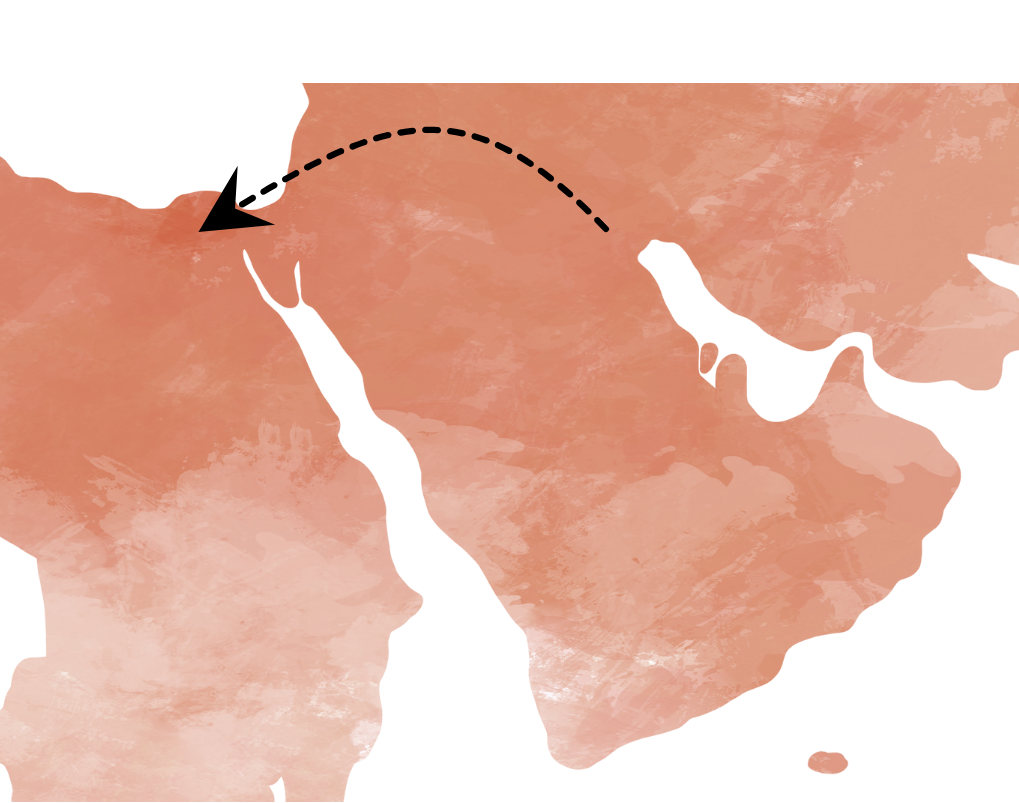
The Journey to Egypt

Ibrahim and His Wife Sarah

Ibrahim’s journey to Egypt, accompanied by his wife Sarah, is marked by tests and divine interventions. During their stay, they encountered a tyrannical ruler who attempted to harm Sarah, but Allah protected her from harm. This part of Ibrahim’s life emphasizes the role of patience and trust in Allah during times of adversity.

Lesson 9 image

The Story of Hajar and Ismaeel

The Origin of Zamzam

Ibrahim’s second wife, Hajar, and their son, Ismaeel, were left in the barren land of Makkah by Allah’s command. From this apparent hardship emerged the miraculous well of Zamzam, and Makkah became a place of great significance. The story of Hajar’s perseverance and trust in Allah illustrates deep faith and reliance on His wisdom.

Lesson 10 image

The Command to Sacrifice

The Ultimate Test of Obedience

Ibrahim was commanded by Allah to sacrifice his beloved son, Ismaeel, in a profound test of faith. Both father and son submitted to Allah’s command without hesitation, only for Allah to replace Ismaeel with a ram at the last moment. This test is a powerful symbol of obedience and submission to Allah’s will, celebrated annually by Muslims during Eid al-Adha.
Lesson 11 image

Building the Ka'bah

Establishing the Center of Tawheed

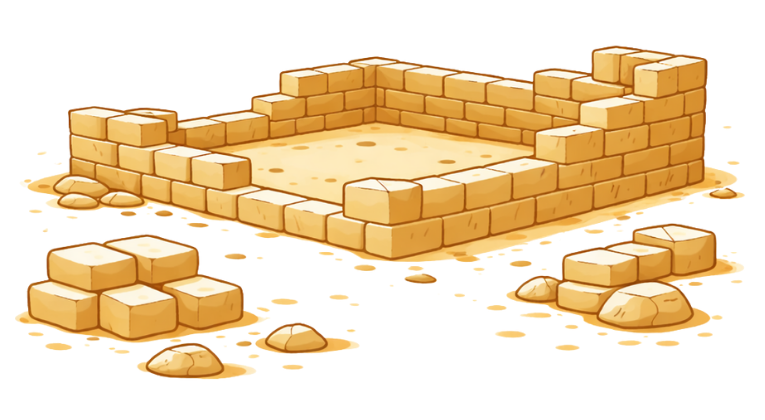
Ibrahim, along with his son Ismaeel, was chosen by Allah to build the Ka'bah in Makkah, the first house of worship dedicated to the oneness of Allah. The construction of the Ka'bah solidified the foundation of monotheism, and to this day, it remains the focal point of Muslim worship worldwide. This event underscores the lasting impact of Ibrahim’s mission.

Lesson 12 image

The Duas of Prophet Ibrahim

His Supplications for His Descendants

Ibrahim made numerous supplications for his descendants, asking Allah to raise from them prophets and righteous people who would continue to guide humanity toward the worship of Allah alone. His duas reflect his deep concern for future generations and his role in laying the groundwork for the spread of Islam through his progeny.

Lesson 13 image

Relationships with Other Prophets

Prophet Ibrahim and His Interactions with Other Prophets

The relationship between Prophet Ibrahim and other prophets, such as Nuh (Noah) before him and his own sons, Ismaeel and Ishaq, highlights the continuity of the message of monotheism. His influence extended to the prophets who followed, with his teachings deeply impacting their missions and the prophetic tradition.

Lesson 14 image

Lessons in Tawakkul

Trust in Allah from the Story of Ibrahim

Ibrahim’s life is a model of Tawakkul (trust in Allah), from leaving his homeland, facing the fire, to being tested with the sacrifice of his son. His constant reliance on Allah’s wisdom and mercy, even in the most challenging circumstances, offers profound lessons in how to maintain faith and trust in Allah’s plan.

Lesson 15 image

The Legacy of Prophet Ibrahim

His Role in the Lineage of Prophethood

Ibrahim’s legacy as the "Father of the Prophets" is a central part of Islamic history. From his descendants came prophets such as Musa (Moses), Dawud (David), Isa (Jesus), and (peace be upon them all). His unwavering commitment to Tawheed and his life of devotion to Allah laid the foundation for the final message of Islam.

Lut
لوط/ Lot
Prophet

Prophet Lut عليه السلام was sent to guide the people of Sodom and Gomorrah. He warned them of divine punishment for their transgressions, ultimately witnessing their destruction as a consequence of their refusal to repent.

Lut
لوط/ Lot
Prophet

Prophet Lut عليه السلام was sent to guide the people of Sodom and Gomorrah. He warned them of divine punishment for their transgressions, ultimately witnessing their destruction as a consequence of their refusal to repent.

Lesson 1 image

The Background and Mission of Lut

Calling to Tawheed

Prophet Lut was the nephew of Prophet Ibrahim. He was sent by Allaah to call his people to worship Allaah alone and obedience and away from polytheism and immorality. From the sins that his people often indulged in was the sin of homosexuality.

Lesson 2 image

The Evil of the People of Lut

Their Arrogance and Immorality

The three angels (Jibreel, Mika’eel, and Israfeel) visited Prophet Ibrahim and during this visit, they informed him that they were sent by Allaah to punish the people of Lut due to their evil deeds. At the same time, Prophet Lut was determined to call them to the straight path but his people mocked him and thought about expelling him from their land. This all resulted in Lut supplicating against his own people after they asked to be punished out of arrogance.

Lesson 3 image

Prophet Ibrahim’s Plea

The Angels’ Mission

When Prophet Ibrahim heard the angels saying they would punish the people of Lut, he tried to intercede on their behalf because he hoped that they would eventually accept the call. However, Allaah informd us that this wouldn’t happen as they were stubborn and turned away every time guidance came to them.

Lesson 4 image

The Visit of the Angels to Prophet Lut

The Peoples’ Corruption

The angels then went to Prophet Lut’s house, appearing in the forms of handsome young men as a test for his people. Upon this, Lut took them in secretly since his people had tried to forbid him from that. His wife, however, went and told them what Prophet Lut was doing which caused them to race to his house.

Lesson 5 image

The Peoples’ Aggression

Punished by the Angels

When they arrived, Lut admonished his people again and encouraged them to marry women and cease from their immoral act. He then testified that they were an evil people who didn’t have a single pious man amongst them. After hearing this, the angels began to carry out the punishment against the people.
Lesson 6 image

Destruction of Lut’s People

What Can We Learn?

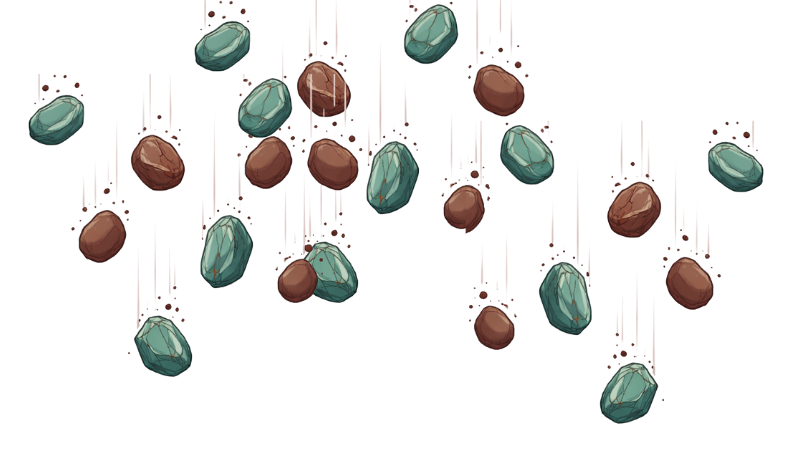
The towns of Sodom in Palestine were turned completely upside down and Allaah rained upon them stones of baked clay. Prophet Lut’s wife was also punished as she was a disbeliever and acted as a spy against her husband. She was not; however, a lewd person as the wives of the prophets cannot fall into such a thing.
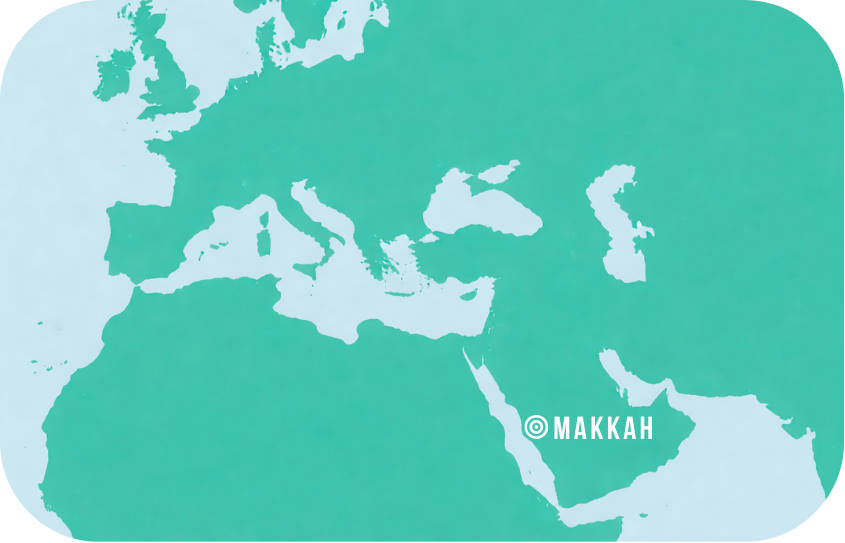
Prophet Ismail عليه السلام is the son of Prophet Ibrahim and Hagar. Isma'il عليه السلام built the Kaaba with his father, in Mecca, as a sanctuary for monotheistic worship.

Ismail
إسماعيل/ Ishmael
Prophet

Prophet Ismail عليه السلام is the son of Prophet Ibrahim and Hagar. Isma'il عليه السلام built the Kaaba with his father, in Mecca, as a sanctuary for monotheistic worship.

Lesson 1 image

Divine Heritage and Early Trials

Lineage, Hajar’s Sacrifice, and the Miracle of Zamzam

Prophet Ismail was born to Prophet Ibrahim and Hajar, continuing a sacred lineage that includes his half-brother Ishaq and Prophet Yaqub . His early life is marked by the pivotal desert trial with Hajar in Makkah, which ultimately led to the miracle of Zamzam.

Lesson 2 image

The Ultimate Test of Obedience

Ismail’s Trust and Submission to Allah's Command

Prophet Ismail faced the ultimate trial when Prophet Ibrahim (AS) was commanded to sacrifice him, reflecting his complete submission to Allah. His unwavering trust in his father’s actions as the command of Allah serves as a powerful lesson in obedience and faith.

Lesson 3 image

Prophetic Counsel and Wisdom

Lessons for a Righteous Household

Prophet Ibrahim provided crucial advice to Prophet Ismail on choosing a pious wife and upholding the values of tawheed within the household. This guidance was essential to ensure that the family continued to be a beacon of pure monotheism and prophetic legacy.

Lesson 4 image

Establishing a Sanctuary for Allah

A Testament to Pure Monotheism

Prophet Ismail , alongside Prophet Ibrahim , played an essential role in building the Kaʿbah, a sacred center for Allah’s worship. This act symbolized their steadfast commitment to tawheed and the establishment of a pure system of monotheistic worship.

Lesson 5 image

A Model of Resilience and Piety

Lasting Influence and Divine Exemplarity

Prophet Ismail is celebrated for his resilience, unwavering trust (tawakkul) in Allah, and exemplary character. His life, as documented in Qur'anic verses and authentic hadith, serves as a timeless model of righteousness and pure submission to Allah.

Ishaq
إسحاق/ Isaac
Prophet
Ishaq
إسحاق/ Isaac
Prophet
Shuaib
شعيب/ Jethro
Prophet
Yaqoub
يعقوب/ Jacob
Prophet

Prophet Yaqoub عليه السلام persevered through familial trials, including the loss of his son Yusuf, ultimately reuniting with him and exemplifying patience and trust in Allah.

Yaqoub
يعقوب/ Jacob
Prophet

Prophet Yaqoub عليه السلام persevered through familial trials, including the loss of his son Yusuf, ultimately reuniting with him and exemplifying patience and trust in Allah.

Lesson 1 image

A Prophet from a Line of Prophets

From Ibrahim to Yaqoub — a legacy of guidance and revelation

Yaqoub was the son of Ishaq and the grandson of Ibrahim , two of the greatest messengers. Allah granted him prophethood and righteous descendants, choosing his family as the lineage of guidance. He is also known as Israel, the father of the twelve tribes.

Lesson 2 image

Yaqoub — also known as Israel — was the father of the twelve tribes

From him came a nation, and through him, the message was preserved

Yaqoub , also called Israel, is the patriarch of the twelve tribes of Banu Israil. Allah repeatedly affirms this status in the Quran, and the Prophet refers to his noble lineage. His children carried both biological and spiritual legacy — and through them, the message of tawheed continued among a nation.

Lesson 3 image

The Father Who Wept for Years

Patience, sorrow, and the beauty of reliance upon Allah.

Prophet Yaqoub endured immense grief when his beloved son Yusuf disappeared. Despite not knowing the truth for years, he never despaired of Allah’s mercy. His story is one of noble sabr (patience), honesty in grief, and perfect tawakkul (trust in Allah).

Lesson 4 image

The Fruits of Long Patience

Reunion, Honour, and the Last Advice

After years of grief and trust in Allah, Yaqoub reunited with Yusuf and his family in Egypt. He witnessed the fulfillment of the dream and ended his life guiding his children to Tawheed. His story closed with faith, joy, and prophetic legacy.

Lesson 5 image

Honoured in Revelation

How Allah Preserved Yaqoub’s Name and Message in the Quran

Even after his death, Yaqoub was honoured in the Quran. Allah mentioned him repeatedly among the rightly guided prophets, praised his worship, and clarified his true religion. His name remains inseparable from the message of Tawheed passed down from Ibrahim .

Prophet Yusuf عليه السلام was the son of Prophet Yaqoub and was known for his wisdom and patience. After being betrayed by his brothers and sold into slavery, Allah raised him to a position of leadership in Egypt.

Yusuf
يوسف/ Joseph
Prophet

Prophet Yusuf عليه السلام put info here

Lesson 1 image

Yusuf’s Childhood Dream

The Beginning of a Divine Plan

Yusuf saw a dream of eleven stars, the sun, and the moon bowing to him, symbolizing a great future. His father, Prophet Yaqoub , warned him not to share it with his jealous brothers. This vision marked the start of Allah’s divine plan, preparing him for trials and leadership.

Lesson 2 image

Jealousy and Deception

The Plot Against Yusuf

Out of envy, Yusuf’s brothers plotted against him and threw him into a well, deceiving their father with a blood-stained shirt. They hoped to erase him from their lives, unaware that their actions were part of Allah’s greater plan. This betrayal began Yusuf’s journey of trials and eventual rise to honor.
Lesson 3 image

Yusuf’s Journey to Egypt

From a Beloved Son to a Slave

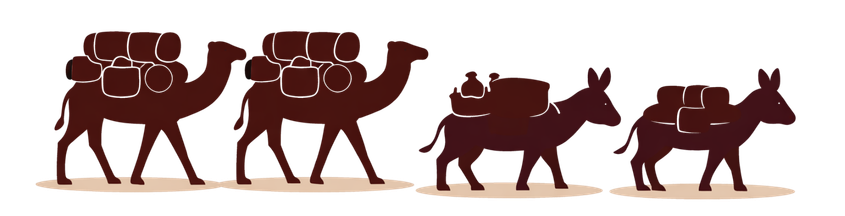
A passing caravan rescued Yusuf and sold him as a slave in Egypt, where he was bought by Al-Aziz. Despite his hardships, he remained steadfast, gaining wisdom and favor in his new household. Even as a servant, Allah was preparing him for a higher purpose.

Lesson 4 image

The Seduction and False Accusation

Choosing Righteousness Over Desire

Zulaikha, the wife of Al-Aziz, attempted to seduce Yusuf , but he firmly rejected her out of fear of Allah. When she falsely accused him, he was imprisoned despite his innocence. His steadfastness in the face of temptation proved his unwavering faith and moral integrity.

Lesson 5 image

Yusuf’s Patience in Captivity

Spreading the Message of Tawheed in Prison

In prison, Yusuf interpreted the dreams of two inmates while using the opportunity to invite them to worship Allah. His interpretations came true, leading to the release of one prisoner who later worked in the king’s court. Yusuf’s patience in unjust imprisonment showcased his unwavering trust in Allah’s plan.

Lesson 6 image

From Prison to Power

Allah’s Wisdom Behind Every Trial

Years later, the king had a perplexing dream that no one could explain, prompting the freed prisoner to remember Yusuf . Yusuf accurately interpreted the dream, predicting a famine and suggesting a plan to manage Egypt’s resources. Impressed, the king freed him and appointed him as a minister, fulfilling part of Allah’s promise.

Lesson 7 image

The Test of the Brothers

The Hidden Plan of Yusuf

Yusuf’s brothers arrived in Egypt seeking food, unaware of his identity. He tested their sincerity by accusing them of spying and demanding that they bring Binyamin. Yusuf orchestrated a plan whereby the brothers were accused of theft and Yusuf retained Binyamin.

Lesson 8 image

Yaqoub Receives the Painful News Again

A Father's Sorrow Deepens

After failing to secure Binyamin’s release, the brothers returned to Yaqoub claiming their brother had been caught stealing. Yaqoub remained patient, placing his trust in Allah. As he wept so much that Yaqoub lost his eyesight. He commanded his sons to return to Egypt to search for Yusuf and Binyamin.

Lesson 9 image

The Divine Purpose Behind Yusuf’s Journey

A Story of Trials and Triumph

After suffering great trials, Yusuf saw the justice of Allah unfold as events led to his family’s return. His brothers, unaware of his true identity, pleaded for mercy in their desperation. Yusuf finally revealed himself, demonstrating both the fulfillment of Allah’s decree and the triumph of patience, faith, and divine justice.

Lesson 10 image

Yusuf’s Reunion and Recognition of Allah’s Mercy

A Journey of Hardship Ending in Thankfulness

At the height of his success, Yusuf humbly thanked Allah, recognizing that all blessings come from Him. He made dua to die as a Muslim, showing that true success is in faith, not power. His humility teaches that gratitude to Allah is key to enduring honor.

Lesson 11 image

A Lifetime of Enduring Trials

The Meaning of Sabr Jameel and Yaqoub’s Unwavering Faith

Yaqoub endured immense grief over Yusuf’s disappearance but never lost faith in Allah. He demonstrated sabr jameel (beautiful patience) by trusting Allah’s wisdom and never despairing. His patience was eventually rewarded when he reunited with his son.


1700 BCE
The Hyksos take control of the Nile Delta, ending Egypt's Middle Kingdom
Politics and war
Explore Egypt of the pharaohs +
The Hyksos take control of the Nile Delta, ending Egypt's Middle Kingdom
1700 BCE
The Hyksos take control of the Nile Delta, ending Egypt's Middle Kingdom
Politics and war
Explore Egypt of the pharaohs +
The Hyksos take control of the Nile Delta, ending Egypt's Middle Kingdom
c.1646 BCE
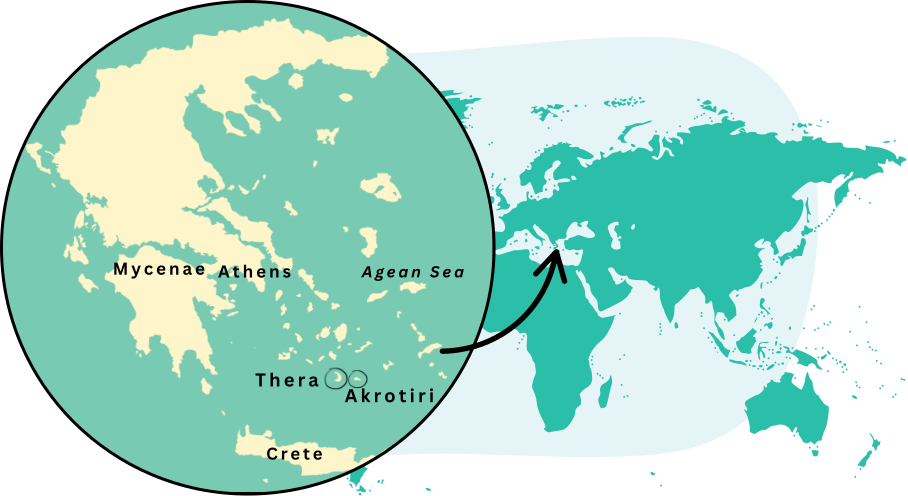
A massive volcanic explosion occurs at Thera
Environment
1600 BCE
The Battle of Mingtiao takes place and the Shang Dynasty is established
Politics and war
Explore Bronze Age China +
The Battle of Mingtiao takes place and the Shang Dynasty is established
1600 BCE
The Battle of Mingtiao takes place and the Shang Dynasty is established
Politics and war
Explore Bronze Age China +
The Battle of Ming Taiyou takes place and the Shang Dynasty is established
1500 BCE
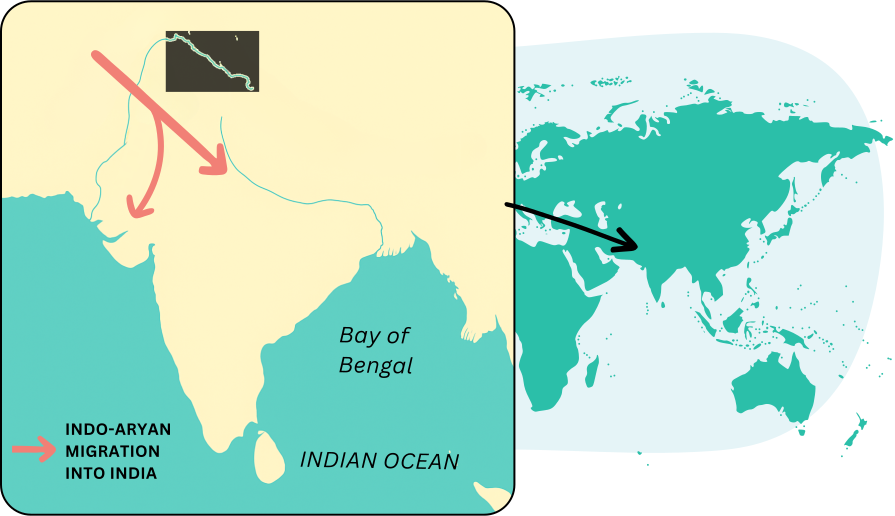
The Indus Valley Civilisation comes to an end. Aryan groups migrate into India from Central Asia
Migration
1400 BCE
Celtic culture starts to emerge in the Upper Danube area
Culture
1400 BCE
Celtic culture starts to emerge in the Upper Danube area
Culture
1400 BCE
The cementation technique, which strengthens iron, is developed
Technology
Musa
موسى/ Moses
Prophet

Prophet Musa عليه السلام was sent to confront the tyrant Firawn and free Bani Israel from oppression. He led his people to freedom and received divine guidance at Mount Sinai.

Musa
موسى/ Moses
Prophet

Prophet Musa عليه السلام was sent to confront the tyrant Firawn and free Bani Israel from oppression. He led his people to freedom and received divine guidance at Mount Sinai.

Lesson 1 image

The Real Firawn

Arabs not Egyptians

Understanding the historical background of Misr is key to understanding the story of Musa and who the real so-called Pharaohs were. Understand the mistakes in western history, and the claims of the modern day Jews.

Lesson 2 image

The Birth of Musa

Allah’s Divine Plan

Firawn the tyrant ruler slaughtered the children of Bani Israel. Prophet Musa was born in difficult circumstances and Allah inspired his mother to put him in a basket to save him. Allah granted Musa divine protection and he was taken in and brought up by the people of the palace.

Lesson 3 image

Musa Kills a Man

Musa Flees Misr

Musa reached full maturity at the age of forty. He accidentally killed an Egyptian man while defending an Israelite and feared retribution from Firawn, so he fled Misr.

Lesson 4 image

Musa’s Journey to Madyan

Meeting Shuayb

Musa arrived in Madyan and helped two women water their flock. As a reward he was offered hospitality by their father Prophet Shuayb . Musa accepted an offer of service and later married one of his daughters.

Lesson 5 image

The Burning Bush

Allah’s First Call to Musa

The burning bush marked the beginning of Musa’s divine mission to challenge the tyranny of Firawn and free Bani Israel. Allah supported Musa with miracles and taught reliance upon Him, the power of dua, and trust in Allah during hardship.

Lesson 6 image

Musa’s Confrontation with Pharaoh

The Struggle for Bani Israel

Musa and his brother Harun were commanded to call Pharaoh to Islam. Pharaoh responded with weak arguments and threats of imprisonment, but Musa presented undeniable proof.

Lesson 7 image

Miracles of Musa

Signs Given by Allah

Musa showed Pharaoh two clear miracles from Allah. Pharaoh accused him of magic and gathered magicians, but they failed to replicate the signs and accepted Islam. They were threatened with death but remained steadfast.

Lesson 8 image

The Exodus

Musa Leading the Israelites to Freedom

Pharaoh continued to oppress Bani Israel and refused to release them. Musa led them out by night, but Pharaoh pursued them. Allah answered Musa’s supplication and destroyed Pharaoh when the sea parted for Bani Israel and drowned Pharaoh and his army.

Lesson 9 image

Crossing the Red Sea

The Miracle and the Destruction of Pharaoh

Musa struck the sea with his staff and it split into towering walls. Bani Israel crossed safely, while Pharaoh drowned. His body was preserved as a sign.

Lesson 10 image

Revelation at Mount Sinai

The Taurat and the Covenant with Allah

Musa spoke to Allah at Mount Sinai and received the Taurat on stone tablets, establishing the covenant.

Lesson 11 image

The Patience and Perseverance of Musa

The Story of al Khidr

Musa was commanded to seek al Khidr, who taught him lessons of patience and divine wisdom behind unseen events.

Lesson 12 image

The Final Days of Musa

His Death and Legacy in Islamic Tradition

Musa passed away after a lifetime of struggle and guidance. His story remains one of courage, patience, and trust in Allah.

Prophet Harun عليه السلام put info here

Harun
هارونAaron
Prophet

Prophet Harun عليه السلام put info here

Khidir
الخضر
Prophet

Prophet Khidir عليه السلام put info here

GO TO HISTREE COURSE

Khidir
الخضر
Prophet

Prophet Khidir عليه السلام put info here

Prophet Yusha عليه السلام put info here

Yusha
يوشع/ Joshua
Prophet

Prophet Yusha عليه السلام put info here

Dhul-Kifl
ذو الكفل/ Ezekiel
Prophet

Prophet Dhu al-Kifl عليه السلام put info here

GO TO HISTREE COURSE

Dhul-Kifl
ذو الكفل/ Ezekiel
Prophet

Prophet Dhu al-Kifl عليه السلام put info here

Prophet Elias عليه السلام put info here

Elias
إلياس / Elijah
Prophet

Prophet Elias عليه السلام put info here

Alyasa
اليسع / Elisha
Prophet

Prophet Al-Yasa عليه السلام put info here

GO TO HISTREE COURSE

Al-Yasa
اليسع / Elisha
Prophet

Prophet Al-Yasa عليه السلام put info here

1300 BCE
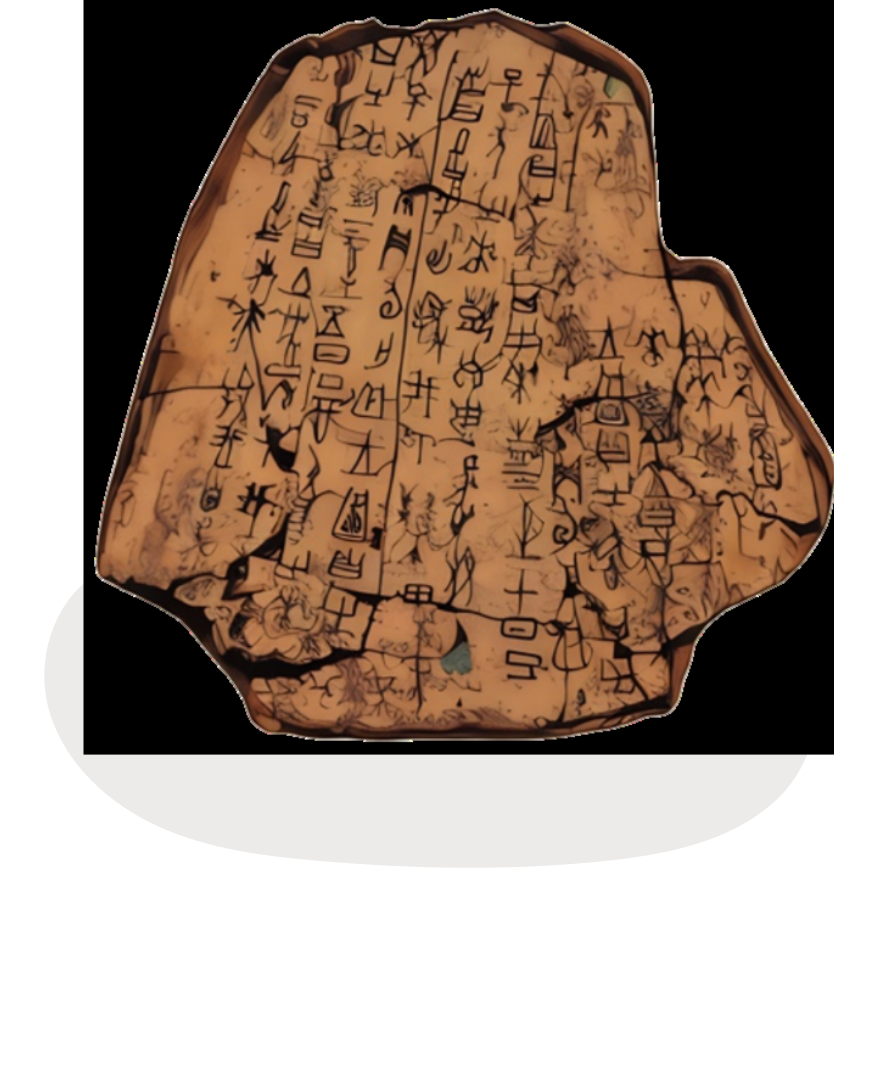
Evidence from bone inscriptions shows that the Shang dynasty Chinese had established the solar year at 365.25 days and lunar month at 29.5 days.
Science
1300 BCE
Evidence from bone inscriptions shows that the Shang dynasty Chinese had established the solar year at 365.25 days and lunar month at 29.5 days.
Science
Chinese writing is used for the first time
1200 BCE
Chinese writing is used for the first time
Invention
Explore First Writings +
1200 BCE
Chinese writing is used for the first time
Invention
Explore First Writings +
Chinese writing is used for the first time
1200 BCE
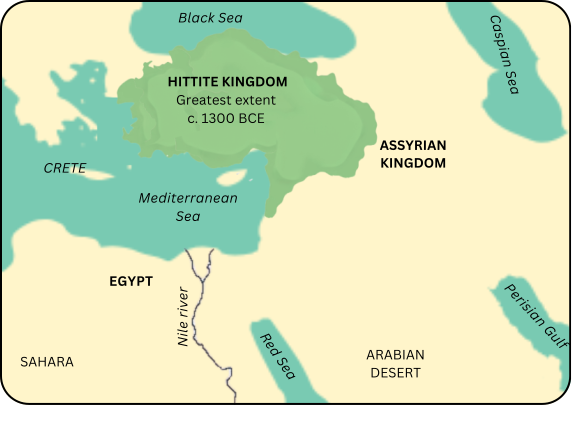
The Hittite Empire (in the region Asia Minor; modern-day Turkey) collapses. The Assyrians begin employing iron for weapons and armor
Civilisation
Explore Collapse of the Bronze Age +
1200 BCE
The Hittite Empire (in the region Asia Minor; modern-day Turkey) collapses. The Assyrians begin employing iron for weapons and armor
Civilisation
Explore Collapse of the Bronze Age +
1200 BCE
Ironworking spreads across the Eastern Mediterranean
Technology
Explore the Iron Age +
1200 BCE
Ironworking spreads across the Eastern Mediterranean
Technology
Explore the Iron Age +
Samuel
شموئيل/ Samuel
Prophet
1020 BCE
Kingdom of Israel created, founded by Saul. Kingdom reaches its greatest height under Prophet Dawud عليه السلام, but splits into Israel and Judah in 926 BCE.
Culture
Explore Ancient Levant +
1020 BCE
Kingdom of Israel created, founded by Saul. Kingdom reaches its greatest height under Prophet Dawud عليه السلام, but splits into Israel and Judah in 926 BCE.
Culture
Explore Ancient Levant +
Dawud
داوود/ David
Prophet

Prophet Dawud عليه السلام was a prophet and king known for his courage, justice, and devotion to Allah. He defeated Jalut, ruled with fairness, and was given the Zaboor.

Dawud
داوود/ David
Prophet

Prophet Dawud عليه السلام was a prophet and king known for his courage, justice, and devotion to Allah. He defeated Jalut, ruled with fairness, and was given the Zaboor.

Lesson 1 image

Dawud’s Family Tree

His Noble Ancestry

Dawud father’s name was Eesha, and he descended from a noble line of prophets, including Yaqoub, Ishaq, and Ibrahim.

Lesson 2 image

Dawud’s Appearance and Personality

His Physical Traits and Popularity

Dawud is described as having short stature, blue eyes, and soft hair. He had a pure and sincere heart and was courageous, which made him beloved among his people.

Lesson 3 image

How Dawud Became King

His Rise from Warrior to Leader

During the conflict between the Israelites and the Philistines, Jalut challenged Talut, the king at the time, to fight him. Talut announced this challenge to the people, but only Dawud accepted it and killed Jalut. After this victory, Dawud was appointed king.

Lesson 4 image

Dawud’s Special Gifts

Abilities in Metalwork and Leading Nature in Worship

Dawud was blessed with the ability to shape iron without tools, allowing him to make armour and protective equipment for his people. He also had a special connection to nature, with mountains and birds glorifying Allah alongside him.

Dawud was also given the ability to recite easily and quickly, and he possessed a beautiful voice unlike any other before him.

Lesson 5 image

Dawud’s Worship and Lifestyle

His Devotion Through Prayer, Fasting, and Work

Dawud was consistent and devoted in his worship. He would sleep for half the night, pray for one third, and then sleep for the remaining sixth. He fasted every other day and, despite being a king, earned his living through his own labour.

Lesson 6 image

Dawud and the Zaboor

The Scripture Revealed to Him

The Zaboor was revealed to Dawud as a scripture full of wisdom and praise. His recitation was so moving that people, animals, and birds would pause to listen, bringing all of creation together in the worship of Allah.

Lesson 7 image

Dawud’s Wisdom as a Judge

Fair and Divinely Guided Judgments

Dawud was known for fairness and wisdom in judgment. In one case involving a dispute over a cow, he delayed ruling until Allah revealed that the claimant had murdered the other man’s father. His just rulings strengthened his authority and reputation.

Lesson 8 image

Allah’s Guidance to Dawud

Ruling Justly and Avoiding Personal Desires

Allah guided Dawud to rule with justice and warned him against following personal desires. Dawud took this guidance seriously, and his household was known for continuous worship, setting a powerful example of devotion and piety.

Lesson 9 image

Dawud’s Death

His Passing and Legacy

Dawud passed away peacefully after encountering the angel of death in his home. After his death, his son Sulaiman succeeded him as king. Dawud’s legacy lived on through his leadership, worship, and devotion to Allah.

Prophet Sulaiman عليه السلام was a prophet and king blessed with wisdom, justice, and great authority. Allah granted him control over the wind, animals, and jinn, and he ruled with gratitude, fairness, and complete obedience to Allah.

Sulaiman
سليمان/ Soloman
Prophet

Prophet Sulaiman عليه السلام was a prophet and king blessed with wisdom, justice, and great authority. Allah granted him control over the wind, animals, and jinn, and he ruled with gratitude, fairness, and complete obedience to Allah.

Lesson 1 image

Introduction to Prophet Sulaiman

A Prophet and King

Prophet Sulaiman , son of Prophet Dawud, was both a prophet and a powerful king. His story is unique as he was granted wisdom, knowledge, and authority by Allah. He ruled with justice and righteousness, combining spiritual leadership with political power. His governance was characterised by his commitment to the message of Tawheed and submission to Allah.

Lesson 2 image

The Gift of Knowledge and Wisdom

Allah blessed Sulaiman with exceptional wisdom and understanding, making him a model of sound judgement. His ability to make insightful decisions in complex matters reflects the value of knowledge in Islam. Sulaiman’s wisdom allowed him to rule effectively, always seeking to please Allah in his judgements and actions.

Lesson 3 image

The Miraculous Abilities of Prophet Sulaiman

Prophet Sulaiman was granted miraculous abilities by Allah, including control over the wind, the ability to communicate with animals, and command over the jinn. These powers were given to him as a test of responsibility and submission to Allah’s will. He used these gifts for the betterment of his people and to propagate the message of Islam.

Lesson 4 image

Prophet Sulaiman and the Ant

Lessons in Compassion

One of the famous stories about Sulaiman is his encounter with an ant colony. As his army approached, he overheard an ant warning the others to hide. He smiled and showed mercy, thanking Allah for his ability to understand even the smallest of creatures. This incident highlights the importance of compassion, humility, and recognising the signs of Allah’s greatness in all of creation.

Lesson 5 image

Prophet Sulaiman and the Hoopoe Bird

Spreading the Message of Tawheed

The hoopoe bird played a key role in delivering the news of a distant kingdom ruled by the Queen of Sheba. Upon hearing this, Sulaiman sent a letter inviting her to worship Allah alone. This event underscores Sulaiman’s dedication to spreading the message of Tawheed.

Lesson 6 image

Prophet Sulaiman and the Jinn

Control and Responsibility

Allah gave Sulaiman control over the jinn, allowing him to command them for various tasks. Despite their power, Sulaiman always reminded them of their duty to obey Allah. His leadership illustrates the responsibility that comes with authority.

Lesson 7 image

The Queen of Sheba

Embracing Islam

The Queen of Sheba, known as Bilqis, ruled over a prosperous kingdom that worshipped the sun. After receiving Sulaiman’s invitation and witnessing signs of Allah’s power, she submitted to Allah and embraced Islam.

Lesson 8 image

The Throne of the Queen of Sheba

A Display of Allah’s Power

By Allah’s will, the throne of the Queen of Sheba was brought to Sulaiman’s court in the blink of an eye. This demonstrated Allah’s power and the obedience of creation to His command.

Lesson 9 image

Prophet Sulaiman’s Justice and Rulership

Sulaiman’s reign was marked by exemplary justice and fairness. He is remembered for wise rulings and equitable judgement, regardless of status or power.

Lesson 10 image

Gratitude to Allah

Sulaiman’s Constant Thankfulness

Despite his immense power, Sulaiman remained humble and grateful, recognising that all blessings come from Allah.

Lesson 11 image

The Death of Prophet Sulaiman

A Reminder of Mortality

Sulaiman passed away while leaning on his staff, reminding all that worldly power is temporary and every soul will taste death.

Lesson 12 image

Prophet Sulaiman’s Legacy

Wisdom, Leadership, and Faith

Sulaiman’s life remains a model of leadership rooted in faith, justice, and obedience to Allah.

1000 BCE
The Phoenicians, living in port-cities in modern day Lebanon, are the leading seafaring merchants of the mediteranian.
Civilisation
1000 BCE
The Phoenicians, living in port-cities in modern day Lebanon, are the leading seafaring merchants of the mediteranian.
Civilisation
1000 BCE
The Maya begin forming complex urban settlements.
Civilisation
Explore the First Cities in the Americas +
1000 BCE
The Maya begin forming complex urban settlements.
Civilisation
Explore the First Cities in the Americas +
800 BCE
Iron use becomes common throughout Central Europe, marking the start of major Celtic migrations
Technology
Explore the Iron Age +
800 BCE
Iron use becomes common throughout Central Europe, marking the start of major Celtic migrations
Technology
Explore the Iron Age +
800-400 BCE
The Hallstatt culture thrives, its prosperity rooted in iron production and salt extraction
Culture
800 BCE
The Etruscan civilisation begins in Italy
Civilisation
800 BCE
The Etruscan civilisation begins in Italy
Civilisation

Prophet Isaiah عليه السلام put info here

Isaiah
إِشَعْيَاء/ Isaiah
Prophet

Prophet Isaiah عليه السلام put info here

Ayoub
أيوب/ Job
Prophet

Prophet Ayoub عليه السلام put info here

GO TO HISTREE COURSE

Ayoub
أيوب/ Job
Prophet

Prophet Ayoub عليه السلام put info here

Yunus عليه السلام put info here

Yunus
يونس/ Jonah
Prophet

Yunus عليه السلام put info here

776 BCE
The first pan-Hellenic games are held at Olympia in Greece
Culture
700-338 BCE
Ancient Greece is composed of hundreds of city states, many which were rivals, the biggest of these were Athens and Sparta.
Explore the Greek City States +
700-338 BCE
Ancient Greece is composed of hundreds of city states, many which were rivals, the biggest of these were Athens and Sparta.
Explore the Greek City States +
753 BCE
The city of Rome is founded
Civilisation
Explore the Rise of Rome +
704-681 BCE
Under Sennacherib, Assyria rises as a dominant Iron Age power
Civilisation
Explore Assyria and Babylonia +
704-681 BCE
Under Sennacherib, Assyria rises as a dominant Iron Age power
Civilisation
Explore Assyria and Babylonia +
600-200 BCE
One of the earliest societies of West Africa, the Nok culture developed iron working around 600 BCE
Technology
Explore Iron Age Africa +
627 BCE
The Assyrian Empire reaches its greatest extent under King Ashurbanipal
Civilisation
Explore Assyria and Babylonia +
627 BCE
The Assyrian Empire reaches its greatest extent under King Ashurbanipal
Civilisation
Explore Assyria and Babylonia +
594 BCE
Athenian statesman Solon lays the foundations of democracy in Athens
Civilisation
572 BCE
Nebuchadnezzar II establishes the new Babylonian Empire
Civilisation
Explore Assyria and Babylonia +
Daniel
دانيال/ Daniel
Prophet

Prophet Daniel عليه السلام put info here

GO TO HISTREE COURSE

Daniel
دانيال/ Daniel
Prophet

Prophet Daniel عليه السلام put info here

Uzair عليه السلام put info here

Uzair
عزير/ Ezra
Prophet

Uzair عليه السلام put info here

535 BCE
Cyrus of Persia conquers Babylon
Civilisation
Explore the Rise of the Persian Empire +
535 BCE
Cyrus of Persia conquers Babylon
Civilisation
Explore the Rise of the Persian Empire +
509 BCE
Republic of Rome founded.
Civilisation
Explore the rise of Rome +
497-479 BCE
The Persian War is fought between the Greek city states and Persia
Politics and War
Explore Greece and Persia at war +
497-479 BCE
The Persian War is fought between the Greek city states and Persia
Politics and War
Explore Greece and Persia at war +
437 BCE
Romans defeat the Etruscans at Veii
Politics and War
Explore the Rise of Rome +
430 BCE
The plague spreads in Athens
Environment
430 BCE
The plague spreads in Athens
Environment
336 BCE
Alexander III ascends to the throne to become King of Macedonia at the age of 21. Within 10 years, he conquered the Persian Empire, creating an empire that spanned from Greece to India
Civilisation
Explore Alexander the Great +
322 BCE
The Mauryan Empire is founded in India
Civilisation
Explore Mauryan India +
322 BCE
The Mauryan Empire is founded in India
Civilisation
Explore Mauryan India +
312 BCE
The Aqua Appia, Rome's first aqueduct, is constructed
Technology
300 BCE
Celtic groups cross the English Channel and settle in Britain
Migration
300 BCE
Celtic groups cross the English Channel and settle in Britain
Migration
272 BCE
Ashoka the Great ascends as ruler of the Mauryan Empire
Politics
Explore Mauryan India +
Explore the Spread of Buddhism +
264 - 146 BCE
The Punic Wars. A series of three wars with the Carthaginians which took place over a century, ended with victory for the Roman Republic.
Politics and War
Explore The Punic Wars +
264 - 146 BCE
The Punic Wars. A series of three wars with the Carthaginians which took place over a century, ended with victory for the Roman Republic.
Politics and War
Explore The Punic Wars +
c. 250 BCE
Archimedes formulates principles of levers, pulleys, and hydrostatics
Science
221 BCE
Qin leader Ying Zheng takes the title Qin Shi Huang, becoming the First Emperor of China
Civilisation
Explore China's First Emperor +
221 BCE
Qin leader Ying Zheng takes the title Qin Shi Huang, becoming the First Emperor of China
Civilisation
Explore China's First Emperor +
206 BCE
The Han Dynasty is founded in China, ushering in centuries of stability and expansion
Civilisation
Explore the Han Empire +
146 BCE
Greece comes under Roman rule
Politics and War
Explore the Rise of Rome +
130 BCE
The Han Dynasty expands westward, opening the Silk Road and connecting China with Central Asia
Trade
Explore the Silk Road +
130 BCE
The Han Dynasty expands westward, opening the Silk Road and connecting China with Central Asia
Trade
Explore the Silk Road +

Prophet Zakariya عليه السلام put info here

Zakariyah
زكريا/ Zachariah
Prophet

Prophet Zakariya عليه السلام put info here

49 BCE
Julius Caesar (assassinated in 44 BCE) seizes power as dictator and sets Rome on a path from republic to empire.
Politics and War
Explore the Roman Empire +
31 BCE
Octavian defeats Antony and Cleopatra at Actium; he becomes sole ruler of Rome
Politics and War
Explore the Roman Empire +
31 BCE
Octavian defeats Antony and Cleopatra at Actium; he becomes sole ruler of Rome
Politics and War
Explore the Roman Empire +
27 BCE
The Senate grants Octavian the title Augustus, he becomes the first emperor, marking the official beginning of the Roman Empire.
Civilisation
Explore the Roman Empire +

Yahya
يحيى/ John
Prophet

Prophet Yahya عليه السلام put info here

GO TO HISTREE COURSE

Yahya
يحيى/ John
Prophet

Prophet Yahya عليه السلام put info here

Jesus عليه السلام put info here

Isa
عيسى/ Jesus
Prophet

Isa عليه السلام put info here

79 CE
Mount Vesuvius erupts, causing the Roman city Pompeii to become entombed
Environment
80 CE
The Colosseum is built in Rome
civilisation
80 CE
The Colosseum is built in Rome
civilisation

100–c.715 CE
The Empire of Aksum, centred in modern-day Ethiopia and Eritrea, becomes a powerful Red Sea trading hub linking Africa, Arabia, and the Mediterranean
Civilisation
100–c.715 CE
The Empire of Aksum, centred in modern-day Ethiopia and Eritrea, becomes a powerful Red Sea trading hub linking Africa, Arabia, and the Mediterranean
Civilisation

285 CE
Emperor Diocletian splits the Roman empire in two
Politics and war
Explore the Roman Empire +

313 CE
Emperor Constantine I legalises Christianity
Religion
Explore the Rise of Christianity +
313 CE
Emperor Constantine I legalises Christianity
Religion
Explore the Rise of Christianity +
330 CE
Emperor Constantine moves the Roman capital from Rome to Byzantium (later renamed Constantinople, modern-day Istanbul)
Civilisation
395 CE
The Roman Empire is formally divided into Western and Eastern halves. The Western Empire collapses in 476, while the Eastern Empire (Byzantium) endures for another thousand years
Civilisation
Explore the Byzantine Empire +
395 CE
The Roman Empire is formally divided into Western and Eastern halves. The Western Empire collapses in 476, while the Eastern Empire (Byzantium) endures for another thousand years
Civilisation
Explore the Byzantine Empire +

410 CE
Rome is attacked and sacked by Visigoths
Politics and War
Explore the Roman Empire +
429 CE
Roman North Africa is invaded by the Vandals; their kingdom ends with an Eastern Roman reconquest in 533
Politics and War
Explore the Roman Empire +
429 CE
Roman North Africa is invaded by the Vandals; their kingdom ends with an Eastern Roman reconquest in 533
Politics and War
Explore the Roman Empire +
456 CE
Visigoths under Theoderic II control Spain apart from Suevic kingdom
politics and war
456 CE
Visigoths under Theoderic II control Spain apart from Suevic kingdom
politics and war
476 CE
The last Western Roman emperor, Romulus Augustulus, is deposed by his army chief, Odovacer
Politics and War
Explore The Roman Empire +
476 CE
The Western Roman Empire falls
Civilisation
Explore The Roman Empire +
476 CE
The Western Roman Empire falls
Civilisation
Explore The Roman Empire +

500–1200 CE
The Kingdom of Ghana dominates West Africa, thriving on trans-Saharan trade in gold, salt, and ivory before its decline with the rise of Mali
Civilisation
500–1500 CE
Christian kingdoms of Nubia flourish along the Nile south of Egypt until their decline in the late Middle Ages
Civilisation
500–1500 CE
Christian kingdoms of Nubia flourish along the Nile south of Egypt until their decline in the late Middle Ages
Civilisation
506 CE
Visigothic king Alaric II issues the Breviarium, a Roman-style law code
civilisation
511-561 CE
Frankish kingdom divided into four after the death of Clovis. Partitioned again in 561. Weakening the rule of the Franks
politics and war
511-561 CE
Frankish kingdom divided into four after the death of Clovis. Partitioned again in 561. Weakening the rule of the Franks
politics and war
533-535 CE
Byzantine emperor Justinian launches a war to reconquer North Africa and Italy from Germanic kings
Politics and War
Explore The Byzantine Empire +
534 CE
Eastern Roman general Belisarius invades Sicily, beginning the reconquest of Italy
politics and war
534 CE
Eastern Roman general Belisarius invades Sicily, beginning the reconquest of Italy
politics and war
570 CE
Muhammad
محمد

Prophet Muhammad ﷺ put info here

GO TO HISTREE COURSE

570 CE
Muhammad
محمد

Prophet Muhammad ﷺ put info here

COMPANIONS OF THE PROPHET ﷺ
597 CE
Sent by Pope Gregory I to convert the English, Augustine arrives with armies in Canterbury
religion
597 CE
Sent by Pope Gregory I to convert the English, Augustine arrives with armies in Canterbury
religion

606 CE
India's Gupta Empire collapses
civilisation
610 CE
Prophet Muhammad ﷺ receives the first revelation through the Angel Jibreel (Gabriel) in the Cave of Hira, near Makkah
Islamic world
618 CE
The Tang Dynasty reunifies China after four centuries of disunity
civilisation
618 CE
The Tang Dynasty reunifies China after four centuries of disunity
civilisation
622 CE
The Hijra - Prophet Muhammad (peace be upon him) migrates from Mecca to Medina
islamic world
622–750 CE
From its beginnings in Medina, the Islamic Empire expands rapidly, defeating the Persian Empire and weakening Byzantium. By 750 it stretches from the borders of India across North Africa to Spain
Islamic world
Explore The Spread of Islam +
622–750 CE
From its beginnings in Medina, the Islamic Empire expands rapidly, defeating the Persian Empire and weakening Byzantium. By 750 it stretches from the borders of India across North Africa to Spain
Islamic world
Explore The Spread of Islam +
624 CE (2 AH)
Battle of Badr - The Muslims, though greatly outnumbered (313 Muslims against approximately 1,000 Quraysh), achieved a decisive victory near the wells of Badr. This marked the first major military encounter between the Muslims of Madinah and the Quraysh of Makkah
Islamic world
630 CE
The Prophet Muhammad ﷺ leads the peaceful conquest of Makkah, consolidating Islam in Arabia
Islamic world
Explore the Spread of Islam +
632–634 CE (11–13 AH)
CALIPH ABU BAKR
Abu Bakr رضي الله عنه becomes the first Caliph, defeating the Ridda rebellions, and initiating the early Islamic conquests
Islamic world
Explore the Spread of Islam +
632–634 CE (11–13 AH)
CALIPH ABU BAKR
Abu Bakr رضي الله عنه becomes the first Caliph, defeating the Ridda rebellions, and initiating the early Islamic conquests
Islamic world
Explore the Spread of Islam +
634–644 CE (13–23 AH)
CALIPH UMAR IBN AL-KHATTAB
Umar ibn al-Khattab رضي الله عنه becomes the second Caliph, leading the Muslim world through vast expansion and the defeat of the Byzantine and Persian empires while building a strong Islamic state
Islamic world
Explore the Spread of Islam +
634 CE (13 AH)
Muslim Victory at Ajnadayn — Under the command of Khalid ibn al-Walid رضي الله عنه, Muslim forces defeated the Byzantines at Ajnadayn (near modern-day Beit Guvrin, Israel), opening the path to Jerusalem and further conquest of the Levant.
Islamic world
Explore the Spread of Islam +
634 CE (13 AH)
Muslim Victory at Ajnadayn — Under the command of Khalid ibn al-Walid رضي الله عنه, Muslim forces defeated the Byzantines at Ajnadayn (near modern-day Beit Guvrin, Israel), opening the path to Jerusalem and further conquest of the Levant.
Islamic world
Explore the Spread of Islam +
634 CE (13 AH)
Muslim Conquest of Damascus — Under the command of Khalid ibn al-Walid رضي الله عنه, Muslim forces captured Damascus (modern-day Damascus, Syria) after a siege, making it one of the first major Byzantine cities to fall.
Islamic world
Explore the Spread of Islam +
636 CE (15 AH)
Khalid ibn al-Walid رضي الله عنه defeats the Byzantine forces at the Battle of Yarmuk (in modern-day Jordan/Syria border region), opening the way for the Islamic conquest of the rest of Syria and Palestine
Islamic world
Explore the Spread of Islam +
636 CE (15 AH)
Khalid ibn al-Walid رضي الله عنه defeats the Byzantine forces at the Battle of Yarmuk (in modern-day Jordan/Syria border region), opening the way for the Islamic conquest of the rest of Syria and Palestine
Islamic world
Explore the Spread of Islam +
636 CE (15 AH)
Muslim Conquest of Homs — Under the command of Abu Ubayda ibn al-Jarrah رضي الله عنه, Muslim forces captured Homs (modern-day Homs, Syria) during the Syrian campaign, shortly after the Battle of Yarmuk.
Islamic world
Explore the Spread of Islam +
636 CE (15 AH)
Muslim victory at the Battle of Qadisiyyah under the command of Sa'd ibn Abi Waqqas رضي الله عنه against the Sasanian Persian Empire (in modern-day Iraq, near Najaf) leads to the Islamic conquest of Mesopotamia
Islamic world
Explore the Spread of Islam +
638 CE (17 AH)
Peaceful Surrender of Jerusalem — Under the command of Abu Ubayda ibn al-Jarrah رضي الله عنه, with Caliph Umar ibn al-Khattab رضي الله عنه personally receiving the surrender, Jerusalem (modern-day Jerusalem, Palestine) surrendered peacefully, with the Caliph guaranteeing protection for Christian holy sites.
Islamic world
Explore the Spread of Islam +
638 CE (17 AH)
Peaceful Surrender of Jerusalem — Under the command of Abu Ubayda ibn al-Jarrah رضي الله عنه, with Caliph Umar ibn al-Khattab رضي الله عنه personally receiving the surrender, Jerusalem (modern-day Jerusalem, Palestine) surrendered peacefully, with the Caliph guaranteeing protection for Christian holy sites.
Islamic world
Explore the Spread of Islam +
640 CE (19 AH)
Muslim Victory at Heliopolis — Under the command of ‘Amr ibn al-‘As رضي الله عنه, Muslim forces achieved a decisive victory over the Byzantines at Heliopolis (near modern-day Cairo, Egypt), paving the way for the conquest of Egypt.
Islamic world
Explore the Spread of Islam +
641 CE (20 AH)
Muslim Conquest of Memphis — Under the command of ‘Amr ibn al-‘As رضي الله عنه, Muslim forces captured Memphis (near modern-day Cairo, Egypt) after a siege, further consolidating Muslim control over the country.
Islamic world
Explore the Spread of Islam +
641 CE (20 AH)
Muslim Conquest of Memphis — Under the command of ‘Amr ibn al-‘As رضي الله عنه, Muslim forces captured Memphis (near modern-day Cairo, Egypt) after a siege, further consolidating Muslim control over the country.
Islamic world
Explore the Spread of Islam +
642 CE (21 AH)
Muslim Victory at Nahavand — Under the command of Al-Nu'man ibn Muqarrin رضي الله عنه, Muslim forces achieved a decisive victory over Sasanian forces under Yazdegerd III at Nahavand (modern-day Nahavand, western Iran), leading to the rapid Muslim conquest of the rest of Persia. Often called the "Victory of Victories."
Islamic world
Explore the Spread of Islam +
642 CE (21 AH)
Muslim Conquest of Alexandria — Under the command of ‘Amr ibn al-‘As رضي الله عنه, Muslim forces captured Alexandria (modern-day Alexandria, Egypt), the last major Byzantine stronghold in the country, after an 18-month siege, completing the Muslim conquest of Egypt.
Islamic world
Explore the Spread of Islam +
642 CE (21 AH)
Muslim Conquest of Alexandria — Under the command of ‘Amr ibn al-‘As رضي الله عنه, Muslim forces captured Alexandria (modern-day Alexandria, Egypt), the last major Byzantine stronghold in the country, after an 18-month siege, completing the Muslim conquest of Egypt.
Islamic world
Explore the Spread of Islam +
643 CE (22 AH)
Muslim Conquest of Barca — Under the command of ‘Amr ibn al-‘As رضي الله عنه, Muslim forces captured Barca (modern-day Al Marj, Libya) in Cyrenaica, beginning the westward expansion into North Africa.
Islamic world
Explore the Spread of Islam +
643 CE (22 AH)
Muslim Conquest of Isfahan — Under the command of Abdullah ibn Budayl رضي الله عنه, Muslim forces accepted the surrender of Isfahan (modern-day Isfahan, central Iran), consolidating control over Persia following Nahavand.
Islamic world
Explore the Spread of Islam +
643 CE (22 AH)
Muslim Conquest of Isfahan — Under the command of Abdullah ibn Budayl رضي الله عنه, Muslim forces accepted the surrender of Isfahan (modern-day Isfahan, central Iran), consolidating control over Persia following Nahavand.
Islamic world
Explore the Spread of Islam +
644–656 CE (23–35 AH)
CALIPH UTHMAN IBN AFFAN
Uthman ibn Affan رضي الله عنه becomes the third Caliph, commissioning the compilation of the Qur’an into a single standard mushaf and continuing expansion across North Africa and into Asia
Islamic world
Explore the Spread of Islam +
644–656 CE (23–35 AH)
CALIPH UTHMAN IBN AFFAN
Uthman ibn Affan رضي الله عنه becomes the third Caliph, commissioning the compilation of the Qur’an into a single standard mushaf and continuing expansion across North Africa and into Asia
Islamic world
Explore the Spread of Islam +
647 CE (26 AH)
Muslim Conquest of Tripoli — Under the command of ‘Amr ibn al-‘As رضي الله عنه, Muslim forces captured Tripoli (modern-day Tripoli, Libya), continuing the westward expansion along the North African coast.
Islamic world
Explore the Spread of Islam +
647 CE (26 AH)
Muslim Conquest of Theodosiopolis — Under the command of Habib ibn Maslama al-Fihri رضي الله عنه, Muslim forces captured Theodosiopolis (modern-day Erzurum, eastern Turkey) during campaigns in Armenia and the Byzantine-Sasanian borderlands.
Islamic world
Explore the Spread of Islam +
647 CE (26 AH)
Muslim Conquest of Theodosiopolis — Under the command of Habib ibn Maslama al-Fihri رضي الله عنه, Muslim forces captured Theodosiopolis (modern-day Erzurum, eastern Turkey) during campaigns in Armenia and the Byzantine-Sasanian borderlands.
Islamic world
Explore the Spread of Islam +
654 CE (33 AH)
Muslim Naval Raids on Rhodes — Under the command of Muawiya ibn Abi Sufyan رضي الله عنه (as governor of Syria), Muslim naval forces temporarily occupied Rhodes (modern-day Rhodes, Greece) as part of early maritime campaigns against Byzantine territories.
Islamic world
Explore the Spread of Islam +
656–661 CE (35–40 AH)
CALIPH ALI IBN ABI TALIB
Ali ibn Abi Talib رضي الله عنه becomes the fourth Caliph, facing major internal conflict including the First Fitna while striving to preserve unity in the Muslim world
Islamic world
661 CE (40 AH)
Assassination of Caliph Ali — Ali ibn Abi Talib رضي الله عنه, the fourth Caliph, was assassinated by a Kharijite while at prayer in Kufa (modern-day Kufa, Iraq). This event deepened the schism between Sunni and Shia Muslims.
Islamic world
661 CE (40 AH)
Assassination of Caliph Ali — Ali ibn Abi Talib رضي الله عنه, the fourth Caliph, was assassinated by a Kharijite while at prayer in Kufa (modern-day Kufa, Iraq). This event deepened the schism between Sunni and Shia Muslims.
Islamic world
661 CE (41 AH)
Establishment of the Umayyad Caliphate — Muawiya ibn Abi Sufyan رضي الله عنه became the first Umayyad Caliph, establishing Damascus (modern-day Damascus, Syria) as the capital of the Islamic Caliphate.
Islamic world
668 CE
Silla forces defeat Goryeo to complete the unification of Korea
civilisation
670 CE (50 AH)
First Siege of Constantinople — Under the command of Sufyan ibn Awf, Muslim forces conducted the first major naval and land assault on Constantinople (modern-day Istanbul, Turkey), which ended unsuccessfully.
Islamic world
670 CE (50 AH)
First Siege of Constantinople — Under the command of Sufyan ibn Awf, Muslim forces conducted the first major naval and land assault on Constantinople (modern-day Istanbul, Turkey), which ended unsuccessfully.
Islamic world
674–678 CE (54–58 AH)
Second Siege of Constantinople — Muslim forces conducted an extended siege of Constantinople (modern-day Istanbul, Turkey) lasting several years, which ended in withdrawal due to Byzantine use of Greek fire.
Islamic world
680 CE (61 AH)
Battle of Karbala — Husayn ibn Ali رضي الله عنه, grandson of Prophet Muhammad ﷺ, was killed along with his followers by Umayyad forces at Karbala (modern-day Karbala, Iraq). This event became central to Shia Islamic identity and mourning traditions.
Islamic world
680 CE (61 AH)
Battle of Karbala — Husayn ibn Ali رضي الله عنه, grandson of Prophet Muhammad ﷺ, was killed along with his followers by Umayyad forces at Karbala (modern-day Karbala, Iraq). This event became central to Shia Islamic identity and mourning traditions.
Islamic world
698 CE
Muslim Arab army captures Carthage
islamic world
Explore the Spread of Islam +
698 CE
Muslim Arab army captures Carthage
islamic world
Explore the Spread of Islam +

701 CE
Taiho code divides Japan into provinces, districts, and villages and decrees a six-yearly census
civilisation world
708-712 CE
A new Japanese capital is built at Nara
civilisation
708-712 CE
A new Japanese capital is built at Nara
civilisation
711 CE (92 AH)
Muslim Conquest of Hispania — Under the command of Tariq ibn Ziyad, Muslim forces crossed the Strait of Gibraltar and defeated the Visigothic King Roderic at the Battle of Guadalete in southern Iberia (modern-day Spain), beginning the Muslim conquest of Hispania and ending the Visigothic Kingdom.
Islamic world
Explore the Spread of Islam +
711 CE (92 AH)
Muslim Conquest of Hispania — Under the command of Tariq ibn Ziyad, Muslim forces crossed the Strait of Gibraltar and defeated the Visigothic King Roderic at the Battle of Guadalete in southern Iberia (modern-day Spain), beginning the Muslim conquest of Hispania and ending the Visigothic Kingdom.
Islamic world
Explore the Spread of Islam +
711 CE (92 AH)
Muslim Conquest of Córdoba — Under the command of Tariq ibn Ziyad (under Musa ibn Nusayr), Muslim forces captured Córdoba (modern-day Córdoba, Spain), which would later become the capital of the Umayyad Caliphate of Córdoba.
Islamic world
Explore the Spread of Islam +
711 CE (92 AH)
Muslim Conquest of Lisbon — Under the campaign of Tariq ibn Ziyad and Musa ibn Nusayr, Muslim forces captured Lisbon (modern-day Lisbon, Portugal) during the rapid conquest of the Iberian Peninsula.
Islamic world
Explore the Spread of Islam +
711 CE (92 AH)
Muslim Conquest of Lisbon — Under the campaign of Tariq ibn Ziyad and Musa ibn Nusayr, Muslim forces captured Lisbon (modern-day Lisbon, Portugal) during the rapid conquest of the Iberian Peninsula.
Islamic world
Explore the Spread of Islam +
711-795 CE (93-179 AH)
IMAM MALIK
Islamic world
scholar
711-795 CE (93-179 AH)
IMAM MALIK
Islamic world
scholar
712 CE (93 AH)
Muslim Conquest of Toledo — Under the command of Tariq ibn Ziyad, Muslim forces captured Toledo (modern-day Toledo, Spain), the Visigothic capital, symbolising the collapse of Visigothic power.
Islamic world
Explore the Spread of Islam +
714 CE (95 AH)
Muslim Conquest of Saragossa — Under the command of Musa ibn Nusayr, the city of Saragossa (modern-day Zaragoza, northeastern Spain) surrendered, extending Muslim control into the Ebro River valley.
Islamic world
Explore the Spread of Islam +
714 CE (95 AH)
Muslim Conquest of Saragossa — Under the command of Musa ibn Nusayr, the city of Saragossa (modern-day Zaragoza, northeastern Spain) surrendered, extending Muslim control into the Ebro River valley.
Islamic world
Explore the Spread of Islam +
717–718 CE (98–99 AH)
Failed Siege of Constantinople — Under the command of Maslama ibn Abd al-Malik, Muslim forces conducted a major siege of Constantinople (modern-day Istanbul, Turkey) lasting about a year, which ended in failure due to Bulgarian intervention, harsh winter, and Greek fire.
Islamic world
718 CE (99 AH)
Christian Victory at Covadonga — Christian forces under Pelagius defeated Muslim forces under Al-Qama at Covadonga (modern-day Covadonga, Asturias, northern Spain), marking the beginning of the Reconquista and establishing the Kingdom of Asturias.
Islamic world
718 CE (99 AH)
Christian Victory at Covadonga — Christian forces under Pelagius defeated Muslim forces under Al-Qama at Covadonga (modern-day Covadonga, Asturias, northern Spain), marking the beginning of the Reconquista and establishing the Kingdom of Asturias.
Islamic world
720 CE (101 AH)
Muslim Conquest of Narbonne — Under the command of Al-Samh ibn Malik al-Khawlani, Muslim forces captured Narbonne (modern-day Narbonne, southern France), a strategic Mediterranean port marking the furthest extent of Muslim expansion into Francia.
Islamic world
Explore the Spread of Islam +
720 CE (101 AH)
Muslim Naval Raids on Sicily — Muslim naval forces began conducting raids on Sicily (modern-day Sicily, Italy), though permanent conquest would not occur until the 9th century.
Islamic world
720 CE (101 AH)
Muslim Naval Raids on Sicily — Muslim naval forces began conducting raids on Sicily (modern-day Sicily, Italy), though permanent conquest would not occur until the 9th century.
Islamic world
720 CE (101 AH)
Muslim Naval Raids on Sardinia — Muslim naval forces conducted raids on Sardinia (modern-day Sardinia, Italy) as part of Mediterranean maritime expansion.
Islamic world
c. 721–815 CE (103–199 AH)
Jabir ibn Hayyan: Foundations of Chemistry — Pioneered systematic experiments and laboratory techniques (distillation, crystallization), laying the groundwork for chemistry.
invention
islamic World
Explore Islamic Scientists +
c. 721–815 CE (103–199 AH)
Jabir ibn Hayyan: Foundations of Chemistry — Pioneered systematic experiments and laboratory techniques (distillation, crystallization), laying the groundwork for chemistry.
invention
islamic World
Explore Islamic Scientists +
725-803 CE (107-187 AH)
FUDAYL IBN IYAD
Islamic world
scholar
736-797 CE (118-181 AH)
ABDULLAH IBN AL-MUBARAK
Islamic world
scholar
736-797 CE (118-181 AH)
ABDULLAH IBN AL-MUBARAK
Islamic world
scholar
750 CE (132 AH)
Establishment of the Abbasid Caliphate - The Abbasids came to power after a civil war ending Umayyad rule, establishing a new caliphate that would last until 1258 CE (656 AH)
Islamic world
750 CE (132 AH)
Establishment of the Abbasid Caliphate - The Abbasids came to power after a civil war ending Umayyad rule, establishing a new caliphate that would last until 1258 CE (656 AH)
Islamic world
751 CE (133 AH)
Abbasid Victory at Talas — Under the command of Ziyad ibn Salih, Abbasid forces defeated Tang Chinese forces at the Battle of Talas near the Talas River (modern-day Taraz, Kazakhstan), consolidating Muslim hold on Transoxiana (Central Asia) for the next 400 years. This battle also facilitated the transfer of Chinese papermaking technology to the Islamic world.
Islamic world
Explore the Spread of Islam +
762 CE (145 AH)
Founding of Baghdad - Under Caliph Al-Mansur, Baghdad was founded and established as the capital of the Abbasid Caliphate in modern-day Iraq, becoming a major centre of Islamic culture and learning
Islamic world
774 CE
Lombard kingdom comes to an end after invasion by Frankish-Carolingian ruler Charlemagne
politics and war
774 CE
Lombard kingdom comes to an end after invasion by Frankish-Carolingian ruler Charlemagne
politics and war
767-820 CE (150-204 AH)
IMAM AL-SHAFIʿI
Islamic world
scholar
780-855 CE (164-241 AH)
AHMAD IBN HANBAL
Islamic world
scholar
780-855 CE (164-241 AH)
AHMAD IBN HANBAL
Islamic world
scholar
c. 780–850 CE (163–236 AH)
Muhammad ibn Musa al-Khwarizmi: Algebra and Algorithms — Al-Khwarizmi formalized algebra, developed systematic methods for solving equations, and helped spread the Hindu-Arabic numeral system — the basis of modern math and computing.
science
islamic World
Explore Islamic Scientists +
c. 780–850 CE (163–236 AH)
Muhammad ibn Musa al-Khwarizmi: Algebra and Algorithms — Al-Khwarizmi formalized algebra, developed systematic methods for solving equations, and helped spread the Hindu-Arabic numeral system — the basis of modern math and computing.
science
islamic World
Explore Islamic Scientists +

800 CE
The Frankish ruler Charlemagne is crowned emperor
civilisation
c. 801–873 CE (185–259 AH)
Al-Kindi: Optics and Knowledge — Al-Kindi advanced optics, cryptography, and helped bridge Greek and Islamic scientific knowledge.
culture
islamic World
Explore Islamic Scientists +
c. 801–873 CE (185–259 AH)
Al-Kindi: Optics and Knowledge — Al-Kindi advanced optics, cryptography, and helped bridge Greek and Islamic scientific knowledge.
culture
islamic World
Explore Islamic Scientists +
800–1380 CE
The Kanem-Bornu Empire thrives around Lake Chad, controlling trade routes linking North Africa to sub-Saharan Africa and adopting Islam as a state religion
Civilisation
810-870 CE (194-256 AH)
IMAM AL-BUKHARI
Islamic world
scholar
811-890 CE (195-277 AH)
ABDURRAHMAN IBN ABI HATIM AL-RAZI
Islamic world
scholar
811-890 CE (195-277 AH)
ABDURRAHMAN IBN ABI HATIM AL-RAZI
Islamic world
scholar
819–875 CE (204–261 AH)
IMAM MUSLIM
Islamic world
scholar
819 CE (204 AH)
Rise of the Samanid Dynasty - Former Abbasid governors in eastern Iran asserted independence, establishing the Samanid dynasty that would rule until 999 CE (389 AH)
Islamic world
826–901 CE (210–288 AH)
Thabit ibn Qurra: Mathematics and Astronomy — Expanded Greek mathematics, made major contributions to geometry and number theory, and influenced medieval astronomy.
science
Islamic World
Explore Islamic Scientists +
826–901 CE (210–288 AH)
Thabit ibn Qurra: Mathematics and Astronomy — Expanded Greek mathematics, made major contributions to geometry and number theory, and influenced medieval astronomy.
science
Islamic World
Explore Islamic Scientists +
c. 850 CE
Invention of gunpowder in China
Invention
853-933 CE (239-321 AH)
ABU JAFAR AL-TAHAWI
Islamic world
scholar
853-933 CE (239-321 AH)
ABU JAFAR AL-TAHAWI
Islamic world
scholar
857-930 CE (242-318 AH)
IBN AL-MUNDHIR
Islamic world
scholar
858–929 CE (244–317 AH)
Al-Battani: Precision in Astronomy — Refined measurements of celestial movements and trigonometric functions, laying foundations for later astronomy and navigation.
science
islamic World
Explore Islamic Scientists +
858–929 CE (244–317 AH)
Al-Battani: Precision in Astronomy — Refined measurements of celestial movements and trigonometric functions, laying foundations for later astronomy and navigation.
science
islamic World
Explore Islamic Scientists +
862 CE
The people of Novgorod invite the Swedish Viking Rurik to rule them
civilisation
862 CE
The people of Novgorod invite the Swedish Viking Rurik to rule them
civilisation
865–925 CE (251–312 AH)
Al-Razi: Clinical Medicine and Chemistry — Distinguished diseases like smallpox and measles, promoted clinical observation, and wrote influential medical encyclopedias used for centuries.
science
islamic World
Explore Islamic Scientists +
867-941 CE (253-329 AH)
ABU AL-HASAN AL-BARBAHARI
Islamic world
scholar
867-941 CE (253-329 AH)
ABU AL-HASAN AL-BARBAHARI
Islamic world
scholar
869 CE
Last dated inscription made at the Maya city-state of Tikal, which disappears shortly thereafter
civilisation
892 CE (279 AH)
Samanids Establish Bukhara as Capital - The Samanids took Bukhara (in modern-day Uzbekistan) and made it their capital, transforming it into a major centre of Persian culture and Islamic scholarship
Islamic world
892 CE (279 AH)
Samanids Establish Bukhara as Capital - The Samanids took Bukhara (in modern-day Uzbekistan) and made it their capital, transforming it into a major centre of Persian culture and Islamic scholarship
Islamic world
893–970 CE (280–360 AH)
IMAM AL-AJURI
Islamic world
scholar

909 CE (297 AH)
Establishment of the Fatimid Caliphate - A Shia dynasty named after Fatimah عليها السلام was established in Ifriqiya (modern-day Tunisia), claiming the caliphate in 910 CE (298 AH)
Islamic world
909 CE (297 AH)
Establishment of the Fatimid Caliphate - A Shia dynasty named after Fatimah (peace be upon her) was established in Ifriqiya (modern-day Tunisia), claiming the caliphate in 910 CE (298 AH)
Islamic world
934 CE (322 AH)
Rise of the Buyid Dynasty - Daylamites from northern Iran expanded after Abbasid withdrawals, establishing the Buyid (Buwayhid) dynasty that would dominate the caliphate
Islamic world
945 CE (334 AH)
Buyids Take Control of Baghdad - Under the command of the Buyids, Baghdad (modern-day Iraq) was taken, allowing them to dominate the Abbasid caliphate whilst keeping the caliph as a figurehead
Islamic world
945 CE (334 AH)
Buyids Take Control of Baghdad - Under the command of the Buyids, Baghdad (modern-day Iraq) was taken, allowing them to dominate the Abbasid caliphate whilst keeping the caliph as a figurehead
Islamic world
962–1027 CE (351–418 AH)
AL-ALAKEE
Islamic world
scholar
965–1040 CE (354–431 AH)
Ibn al-Haytham: Optics and Scientific Method — Proved that vision comes from light entering the eye, developed the camera obscura, and pioneered experimental science.
invention
islamic World
Explore Islamic Scientists +
969 CE (358 AH)
Fatimid Conquest of Egypt and Founding of Cairo - Under the Fatimid Caliphate, Egypt was conquered and Cairo (modern-day Cairo, Egypt) was founded as the new capital, establishing it as a major centre of Shia Islamic learning
Islamic world
969 CE (358 AH)
Fatimid Conquest of Egypt and Founding of Cairo - Under the Fatimid Caliphate, Egypt was conquered and Cairo (modern-day Cairo, Egypt) was founded as the new capital, establishing it as a major centre of Shia Islamic learning
Islamic world
973–1050 CE (362–442 AH)
Al-Biruni: Measuring the Earth — Calculated the Earth’s radius with great accuracy, studied geography, astronomy, calendars, and world cultures.
science
islamic World
Explore Islamic Scientists +
977 CE (366 AH)
Establishment of the Ghaznavid Dynasty - A Turkic dynasty based at Ghazni in Khurasan (modern-day Afghanistan) was established, eventually controlling much of the former western Samanid lands
Islamic world
977 CE (366 AH)
Establishment of the Ghaznavid Dynasty - A Turkic dynasty based at Ghazni in Khurasan (modern-day Afghanistan) was established, eventually controlling much of the former western Samanid lands
Islamic world
978-1071 CE (368-463 AH)
IBN ABD AL-BARR
Islamic world
scholar
d. 979 CE (369 AH)
IBN ABI DAWOOD AS SIJISTANI
Islamic world
scholar
d. 979 CE (369 AH)
IBN ABI DAWOOD AS SIJISTANI
Islamic world
scholar
980–1037 CE (370–428 AH)
Ibn Sina: Canon of Medicine — Ibn Sina’s medical encyclopedia shaped medical education in the Islamic world and Europe for centuries. He systematized diagnosis, treatment, and pharmacology.
science
islamic World
Explore Islamic Scientists +
980–1037 CE (370–428 AH)
Ibn Sina: Canon of Medicine — Ibn Sina’s medical encyclopedia shaped medical education in the Islamic world and Europe for centuries. He systematized diagnosis, treatment, and pharmacology.
science
islamic World
Explore Islamic Scientists +
999 CE (389 AH)
Fall of the Samanid Dynasty - The Qarakhanids seized Bukhara (modern-day Uzbekistan), ending Samanid rule after nearly two centuries
Islamic world

1000 CE
The city of Tiwanaku, centre of a major Andean civilisation, is abandoned
Civilisation
1000 CE
The city of Tiwanaku, centre of a major Andean civilisation, is abandoned
Civilisation
1002-1071 CE (392-463 AH)
AL-KHATIB AL-BAGHDADI
Islamic world
scholar
d. 1004 CE (395 AH)
IBN MUNDA
Islamic world
scholar
d. 1004 CE (395 AH)
IBN MUNDA
Islamic world
scholar
1005–1088 CE (396–481 AH)
ABU ISMAIL AL-ANSARI
Islamic world
scholar
1005 CE (395 AH)
Ghaznavid Expansion - Under Ghaznavid rule, much of the western Samanid territories were brought under control, extending their influence across Central Asia and into the Indian subcontinent
Islamic world
1005 CE (395 AH)
Ghaznavid Expansion - Under Ghaznavid rule, much of the western Samanid territories were brought under control, extending their influence across Central Asia and into the Indian subcontinent
Islamic world
1037 CE (429 AH)
Rise of the Seljuk Empire - Turkic rulers from Khurasan established the Seljuk Empire, beginning a period of Turkic dominance in the Islamic world
Islamic world
1040 CE (431 AH)
Seljuk Victory at Dandanqan - Under the command of the Seljuks, Ghaznavid forces were defeated at the Battle of Dandanqan (near modern-day Merv, Turkmenistan), reducing the Ghaznavids mainly to Ghazni and Lahore
Islamic world
1040 CE (431 AH)
Seljuk Victory at Dandanqan - Under the command of the Seljuks, Ghaznavid forces were defeated at the Battle of Dandanqan (near modern-day Merv, Turkmenistan), reducing the Ghaznavids mainly to Ghazni and Lahore
Islamic world
1044-1122 CE (436-516 AH)
AL-BAGHAWI
Islamic world
scholar
1048–1131 CE (440–525 AH)
Omar Khayyam: Algebra and Astronomy — Advanced solutions for cubic equations and reformed the calendar with exceptional precision.
science
islamic World
Explore Islamic Scientists +
1048–1131 CE (440–525 AH)
Omar Khayyam: Algebra and Astronomy — Advanced solutions for cubic equations and reformed the calendar with exceptional precision.
science
islamic World
Explore Islamic Scientists +
d. 1052 CE (444 AH)
ABU NASR AS-SIJZI
Islamic world
scholar
1055 CE (447 AH)
Seljuks Enter Baghdad - Under the command of the Seljuks, Baghdad (modern-day Iraq) was entered, ending Buyid control whilst recognising the Abbasid caliph, establishing Seljuk dominance over the caliphate
Islamic world
1056 CE (448 AH)
Rise of the Almoravid Dynasty - A confederation of Sanhaja Berbers established the Almoravid dynasty, which would control Morocco and parts of al-Andalus until 1147 CE (541 AH)
Islamic world
1056 CE (448 AH)
Rise of the Almoravid Dynasty - A confederation of Sanhaja Berbers established the Almoravid dynasty, which would control Morocco and parts of al-Andalus until 1147 CE (541 AH)
Islamic world
1062 CE (454 AH)
Founding of Marrakesh and Fall of Last Buyids - Under the Almoravids, Marrakesh (modern-day Marrakesh, Morocco) was founded as their capital. The last Buyid territories fell to the Seljuks, ending their dynasty
Islamic world
1071 CE (463 AH)
Seljuk Victory at Manzikert - Under Seljuk command, Byzantine forces were defeated at the Battle of Manzikert (near modern-day Malazgirt, eastern Turkey), opening Anatolia to Turkish settlement and Islamic expansion
Islamic world
1071 CE (463 AH)
Seljuk Victory at Manzikert - Under Seljuk command, Byzantine forces were defeated at the Battle of Manzikert (near modern-day Malazgirt, eastern Turkey), opening Anatolia to Turkish settlement and Islamic expansion
Islamic world
1092 CE (485 AH)
Death of Malik-Shah and Seljuk Fragmentation - Following the death of Sultan Malik-Shah, the Seljuk realm began to fracture into smaller competing states, weakening central authority
Islamic world
1099 CE
Armies of the First Crusade capture Jerusalem
islamic world
Explore The Crusades +
1099 CE
Armies of the First Crusade capture Jerusalem
islamic world
Explore The Crusades +

1100–1165 CE (494–560 AH)
Al-Idrisi: Geography and Cartography — Created one of the most accurate medieval world maps, combining information from across Europe, Africa, and Asia.
technology
islamic World
Explore Islamic Scientists +
1136–1206 CE (530–603 AH)
Al-Jazari: Engineering and Automata — Designed advanced water clocks, pumps, and mechanical automata. His book of inventions influenced both Islamic and European engineering.
invention
islamic World
Explore Islamic Scientists +
1136–1206 CE (530–603 AH)
Al-Jazari: Engineering and Automata — Designed advanced water clocks, pumps, and mechanical automata. His book of inventions influenced both Islamic and European engineering.
invention
islamic World
Explore Islamic Scientists +
d. 1140 CE (535 AH)
ABUL QAASIM AT-TAYMI
Islamic world
scholar
1144-1194 CE (538-590 AH)
ABU ISHAQ AL-SHATIBI
Islamic world
scholar
1144-1194 CE (538-590 AH)
ABU ISHAQ AL-SHATIBI
Islamic world
scholar
1146-1203 CE (541-600 AH)
ABDUL-GHANI AL-MAQDISI
Islamic world
scholar
1146–1223 CE (541–620 AH)
IMAAM MUWAFFAQUD-DEEN ABDULLAAH IBN AHMAD IBN QUDAAMAH
Islamic world
scholar
1146–1223 CE (541–620 AH)
IMAAM MUWAFFAQUD-DEEN ABDULLAAH IBN AHMAD IBN QUDAAMAH
Islamic world
scholar
1147 CE (541 AH)
Fall of the Almoravid Dynasty - The Almohads, a rival Berber movement, captured Marrakesh (modern-day Marrakesh, Morocco), ending Almoravid rule
Islamic world
1147 CE (541 AH)
Fall of the Almoravid Dynasty - The Almohads, a rival Berber movement, captured Marrakesh (modern-day Marrakesh, Morocco), ending Almoravid rule
Islamic world
d. 1166 CE (562 AH)
ABU SA'AD AS-SAMAANI
Islamic world
scholar
1171 CE (567 AH)
End of the Fatimid Caliphate - The Fatimid Caliphate ended in Egypt, replaced by Ayyubid rule under Salah ad-Din (Saladin)
Islamic world
1180–1897 CE
The Kingdom of Benin, in present-day Nigeria, becomes renowned for its sophisticated art, governance, and Benin Bronzes before being conquered by the British
Civilisation
1180–1897 CE
The Kingdom of Benin, in present-day Nigeria, becomes renowned for its sophisticated art, governance, and Benin Bronzes before being conquered by the British
Civilisation
1181-1245 CE (577-643 AH)
IBN AL-SALAH
Islamic world
scholar
1181-1245 CE (577-643 AH)
IBN AL-SALAH
Islamic world
scholar
1186 CE (582 AH)
Fall of the Ghaznavid Dynasty - The last Ghaznavid territories fell, ending nearly two centuries of Ghaznavid rule in Khurasan and northern India
Islamic world
d. 1188 CE (584 AH)
ABU BAKR MUHAMMAD BIN MUSA AL-HAZIMI
Islamic world
scholar
1194 CE (590 AH)
End of the Seljuk Empire - The Great Seljuk Empire came to an end, though various Seljuk successor states continued in Anatolia and elsewhere
Islamic world
1194 CE (590 AH)
End of the Seljuk Empire - The Great Seljuk Empire came to an end, though various Seljuk successor states continued in Anatolia and elsewhere
Islamic world

1201–1274 CE (597–672 AH)
Nasir al-Din al-Tusi: Astronomy and Mathematics — Developed the Tusi couple, a key astronomical model later used by Copernicus, and advanced trigonometry as a separate discipline.
science
islamic World
Explore Islamic Scientists +
1201-1267 CE (598-665 AH)
SHIHAB AL-DIN ABU SHAMA
Islamic world
scholar
1201-1267 CE (598-665 AH)
SHIHAB AL-DIN ABU SHAMA
Islamic world
scholar
1204 CE
Constantinople is captured by the Fourth Crusade; Crusader armies stormed and brutally sacked the Byzantine capital. The event caused massive destruction: libraries, churches, and relics were looted.
politics and war
Explore the Crusades +
1204 CE
Constantinople is captured by the Fourth Crusade; Crusader armies stormed and brutally sacked the Byzantine capital. The event caused massive destruction: libraries, churches, and relics were looted.
politics and war
Explore the Crusades +
1206 CE
The Delhi Sultanate is established in India
islamic world
1220–1450 CE
The Kingdom of Zimbabwe develops in southern Africa, famed for its stone-built capital Great Zimbabwe and its role in regional gold and ivory trade
Civilisation
1220–1450 CE
The Kingdom of Zimbabwe develops in southern Africa, famed for its stone-built capital Great Zimbabwe and its role in regional gold and ivory trade
Civilisation
1228-1303 CE (625-702 AH)
ABU FATH IBN DAQIQ AL-ID
Islamic world
scholar
1234-1277 CE (631-676 AH)
IMAM NAWAWI
Islamic world
scholar
1234-1277 CE (631-676 AH)
IMAM NAWAWI
Islamic world
scholar
1235–1660 CE
The Mali Empire rises in West Africa, reaching its peak under Mansa Musa, whose wealth and pilgrimage to Mecca made Timbuktu a centre of trade and learning
Civilisation
Explore the life of Mansa Musa +
d. 1245 CE (643 AH)
DIYAA AL-MAQDASI
Islamic world
scholar
d. 1245 CE (643 AH)
DIYAA AL-MAQDASI
Islamic world
scholar
1258 CE
Mongol armies sack Baghdad
islamic world
1258 CE
Mongol armies sack Baghdad
islamic world
1263-1328 CE (661-728 AH)
IBN TAYMIYYAH
Islamic world
scholar
1270 CE
Mongols establish a government in Korea; the Goryeo court survives only on an offshore island
politics and war
Explore the Mongol Conquests +
1270 CE
Mongols establish a government in Korea; the Goryeo court survives only on an offshore island
politics and war
Explore the Mongol Conquests +
1274-1348 CE (673-748 AH)
AL-DHAHABI
Islamic world
scholar
1279 CE
Mongols complete conquest of Southern Song; Yuan dynasty established
civilisation
Explore the Mongol Conquests +
1280s CE (680s AH)
Ottoman Empire: Rise of Osman - After the collapse of the Seljuk Empire, western Anatolia (modern-day Turkey) was divided into competing states known as Beyliks. One Beylik, based around the small town of Sogut (modern-day northwestern Turkey), began to expand under the leadership of Osman, the founder of the Ottoman dynasty, laying the foundations for what would become the Ottoman Empire
Islamic world
1280s CE (680s AH)
Ottoman Empire: Rise of Osman - After the collapse of the Seljuk Empire, western Anatolia (modern-day Turkey) was divided into competing states known as Beyliks. One Beylik, based around the small town of Sogut (modern-day northwestern Turkey), began to expand under the leadership of Osman, the founder of the Ottoman dynasty, laying the foundations for what would become the Ottoman Empire
Islamic world
c. 1280 CE
First true mechanical clocks appear in Europe
Invention
1292-1350 CE (691-751 AH)
IBN AL-QAYYIM
Islamic world
scholar

1301-1373 CE (701-774 AH)
IBN KATHIR
Islamic world
scholar
1301-1373 CE (701-774 AH)
IBN KATHIR
Islamic world
scholar
1304–1375 CE (704–777 AH)
IBN AL-SHATIR: PLANETARY MODELS — Created precise planetary models centuries before Copernicus.
science
Islamic World
Explore Islamic Scientists +
d. 1305 CE (705 AH)
IBN KHALAF AL-DIMYATI
Islamic world
scholar
d. 1305 CE (705 AH)
IBN KHALAF AL-DIMYATI
Islamic world
scholar
1326 CE (726 AH)
Ottoman Empire: Conquest of Bursa - Under the command of Orhan, son of Osman and second Ottoman ruler, the important Byzantine town of Bursa (modern-day northwestern Turkey) was captured and established as the first Ottoman capital. From there, Orhan conquered much of the rest of Anatolia and sent the first Ottoman forces into Europe
Islamic world
1326 CE (726 AH)
Ottoman Empire: Conquest of Bursa - Under the command of Orhan, son of Osman and second Ottoman ruler, the important Byzantine town of Bursa (modern-day northwestern Turkey) was captured and established as the first Ottoman capital. From there, Orhan conquered much of the rest of Anatolia and sent the first Ottoman forces into Europe
Islamic world
1326–1402 CE (726–805 AH)
Ottoman Expansion in Anatolia — Under Orhan’s rule, the Ottomans conquered most remaining Byzantine cities in northwest Anatolia. Anatolia was later unified under Bayezid I, grandson of Orhan, who subdued the Beyliks in the southwest after becoming sultan in 1389 CE (791 AH).
Islamic world
1332–1406 CE (732–808 AH)
Ibn Khaldun: Sociology and History — Developed theories on the rise and fall of civilizations and early concepts of economics and social science.
culture
islamic World
Explore Islamic Scientists +
1335-1393 CE (736-795 AH)
IBN RAJAB AL-HANBALI
Islamic world
scholar
1337 CE
The Hundred Years War between England and France begins
politics and war
Explore The 100 Years war +
1337 CE
The Hundred Years War between England and France begins
politics and war
Explore The 100 Years war +
1348 CE
The Black Death devastates most of Europe
population
Explore The Black Death +
1354 CE (755 AH)
Ottoman Empire: Entry into Europe — The Ottomans crossed into Gallipoli (modern-day northwestern Turkey, on the European side of the Dardanelles), establishing their first foothold in Europe and beginning their expansion into the Balkans.
Islamic world
1354 CE (755 AH)
Ottoman Empire: Entry into Europe — The Ottomans crossed into Gallipoli (modern-day northwestern Turkey, on the European side of the Dardanelles), establishing their first foothold in Europe and beginning their expansion into the Balkans.
Islamic world
b.1363 CE (764 AH)
IBN ABDUL HADI
Islamic world
scholar
b.1363 CE (764 AH)
IBN ABDUL HADI
Islamic world
scholar
1372–1449 CE (773–852 AH)
IBN HAJAR AL-ASQALANI
Islamic world
scholar
1389 CE (791 AH)
Ottoman Empire: Victory at Kosovo — Under the command of Sultan Murad I, the third Ottoman ruler, Ottoman forces defeated Serbia at the Battle of Kosovo (modern-day Kosovo), marking the beginning of Ottoman supremacy in the Balkans. The Ottomans had occupied much of Thrace (modern-day southeastern Balkans), making Edirne (Adrianople) the new capital.
Islamic world
1394–1449 CE (797–853 AH)
Ulugh Beg: Observatories and Star Catalogues — Built a major observatory in Samarkand and produced one of the most accurate star catalogs of his time.
science
islamic World
Explore Islamic Scientists +
1394–1449 CE (797–853 AH)
Ulugh Beg: Observatories and Star Catalogues — Built a major observatory in Samarkand and produced one of the most accurate star catalogs of his time.
science
islamic World
Explore Islamic Scientists +

1400–1402 CE (803–805 AH)
Ottoman Empire: Mongol Threat Under Timur — The Mongol-Turkic conqueror Timur (Tamerlane), angered by Sultan Bayezid I’s demands for tribute from one of his vassals, invaded Ottoman territory. At the Battle of Ankara (1402 / 805 AH) (modern-day Ankara, Turkey), Timur defeated Sultan Bayezid I, causing many Anatolian Beyliks to break away from Ottoman rule.
Islamic world
1400–1402 CE (803–805 AH)
Ottoman Empire: Mongol Threat Under Timur — The Mongol-Turkic conqueror Timur (Tamerlane), angered by Sultan Bayezid I’s demands for tribute from one of his vassals, invaded Ottoman territory. At the Battle of Ankara (1402 / 805 AH) (modern-day Ankara, Turkey), Timur defeated Sultan Bayezid I, causing many Anatolian Beyliks to break away from Ottoman rule.
Islamic world
d. 1404 CE (807 AH)
NUAYD AL-HAYTHAMI
Islamic world
scholar
d. 1404 CE (807 AH)
NUR UDDIN AL-HAYTHAMI
Islamic world
scholar
1405 CE (808 AH)
Ottoman Empire: Death of Timur — The death of Timur, the Mongol-Turkic conqueror, saved the Ottomans from further losses and allowed them to begin recovering their territories.
Islamic world
1427–1497 CE (831–902 AH)
AL-SAKHAWI
Islamic world
scholar
1427–1497 CE (831–902 AH)
AL-SAKHAWI
Islamic world
scholar
1429 CE
The Aztecs establish the Triple Alliance with other states in the Valley of Mexico, which forms the basis of their empire
civilisation
1429 CE
The Aztecs establish the Triple Alliance with other states in the Valley of Mexico, which forms the basis of their empire
civilisation
1430 CE (834 AH)
Ottoman Empire: Conquest of Thessaloniki — Thessaloniki, also known as Salonika (modern-day Thessaloniki, northern Greece), was captured by Ottoman forces, further extending their control in the Balkans.
Islamic world
d. 1437 CE (841 AH)
BURHAN AL-HALABI
Islamic world
scholar
1438 CE
Pachacuti begins a series of conquests that establishes the Inca Empire
civilisation
1438 CE
Pachacuti begins a series of conquests that establishes the Inca Empire
civilisation
1441 CE
The assassination of shogun Ashikaga Yoshinori sparks the Onin Wars and 150 years of Japanese disunity
politics and war
1444 CE (848 AH)
Ottoman Empire: Victory at Varna — An attempted crusade led by European Christian forces to prevent Ottoman expansion was defeated at the Battle of Varna (modern-day Varna, Bulgaria), securing Ottoman dominance in the region.
Islamic world
1444 CE (848 AH)
Ottoman Empire: Victory at Varna — An attempted crusade led by European Christian forces to prevent Ottoman expansion was defeated at the Battle of Varna (modern-day Varna, Bulgaria), securing Ottoman dominance in the region.
Islamic world
1445–1505 CE (849–911 AH)
IMAM AS-SUYOOTI
Islamic world
scholar
1451 CE (855 AH)
Ottoman Empire: Mehmed II Becomes Sultan — By the time Mehmed II, also known as Mehmed the Conqueror, became the seventh Ottoman sultan, the Byzantine Empire consisted of little more than the city of Constantinople itself.
Islamic world
1453 CE (857 AH)
Ottoman Empire: Conquest of Constantinople — Under the command of Sultan Mehmed II, also known as Mehmed the Conqueror, Ottoman forces laid siege to Constantinople (modern-day Istanbul, Turkey) in April, cutting off the city's supply lines. The Byzantine Emperor Constantine XI Palaiologos resisted for nearly eight weeks before the Ottomans captured the city. The Byzantine Empire came to an end, and Constantinople became the new Ottoman capital.
Islamic world
1453 CE (857 AH)
Ottoman Empire: Conquest of Constantinople — Under the command of Sultan Mehmed II, also known as Mehmed the Conqueror, Ottoman forces laid siege to Constantinople (modern-day Istanbul, Turkey) in April, cutting off the city's supply lines. The Byzantine Emperor Constantine XI Palaiologos resisted for nearly eight weeks before the Ottomans captured the city. The Byzantine Empire came to an end, and Constantinople became the new Ottoman capital.
Islamic world
1453 CE
The Hundred Years War ends with France's recapture of Bordeaux from the English
politics and war
1454 CE
Gutenberg prints the first major book (Gutenberg Bible) using movable type
Invention
1454 CE
Gutenberg prints the first major book (Gutenberg Bible) using movable type
Invention
1456 CE (860 AH)
Ottoman Empire: Failed Siege of Belgrade — The failure of a siege by Sultan Mehmed II at Belgrade (modern-day Belgrade, Serbia) put a temporary halt to Ottoman advances into Hungary.
Islamic world
1460 CE (865 AH)
Ottoman Empire: Conquest of Morea — Having captured Constantinople, Sultan Mehmed II dealt with the remaining fragments of the Byzantine Empire, capturing the Morea, also known as the Peloponnese (modern-day southern Greece), and consolidating Ottoman control in Greece.
Islamic world
1460 CE (865 AH)
Ottoman Empire: Conquest of Morea — Having captured Constantinople, Sultan Mehmed II dealt with the remaining fragments of the Byzantine Empire, capturing the Morea, also known as the Peloponnese (modern-day southern Greece), and consolidating Ottoman control in Greece.
Islamic world
1461 CE (866 AH)
Ottoman Empire: Conquest of Trebizond — Ottoman forces under Sultan Mehmed II conquered the Empire of Trebizond (modern-day Trabzon, northeastern Turkey), a breakaway Byzantine region on the Black Sea coast, eliminating the last independent Greek state.
Islamic world
1463 CE (868 AH)
Ottoman Empire: Conquest of Bosnia — The defeat of the Kingdom of Bosnia by Ottoman forces under Sultan Mehmed II extended Ottoman control further into the Balkans, with resistance now confined to scattered fortresses and Venetian possessions along the Adriatic coast.
Islamic world
1463 CE (868 AH)
Ottoman Empire: Conquest of Bosnia — The defeat of the Kingdom of Bosnia by Ottoman forces under Sultan Mehmed II extended Ottoman control further into the Balkans, with resistance now confined to scattered fortresses and Venetian possessions along the Adriatic coast.
Islamic world
1460–1481 CE (865–886 AH)
Ottoman Empire: Consolidation Under Mehmed II — By the end of Sultan Mehmed II’s reign, the principalities of Wallachia (modern-day southern Romania) and Moldavia (modern-day northeastern Romania and Republic of Moldova) had been reduced to vassal status, and Ottoman rule in the Balkans was firmly established, with resistance confined to a few scattered fortresses and Venetian possessions in Greece along the Adriatic coast.
Islamic world
1480 CE
Ivan III of Russia establishes the independence of Muscovy from the Mongols
politics and war
1480 CE
Ivan III of Russia establishes the independence of Muscovy from the Mongols
politics and war
1492 CE
Christopher Columbus makes landfall in the Americas
migration
Explore European Exploration +

d. 1503 CE (909 AH)
YUSUF BIN HASAN AL-HANBALI
Islamic world
scholar
1581 CE
Netherlands: Declared independence from Spain (Act of Abjuration). Historically part of the Habsburg Netherlands; medieval Dutch counties and cities existed long before.
Nation Formation
1581 CE
Netherlands: Declared independence from Spain (Act of Abjuration). Historically part of the Habsburg Netherlands; medieval Dutch counties and cities existed long before.
politics and war
1526–1585 CE (932–993 AH)
Taqi al-Din: Engineering and Astronomy — Built one of the most advanced observatories of the age in Istanbul and developed precise clocks and instruments.
invention
islamic World
Explore Islamic Scientists +
1526 CE
Babur invades north India and establishes the Mughal Empire
Islamic World
Explore Mughal India +
1526 CE
Babur invades north India and establishes the Mughal Empire
Islamic World
Explore Mughal India +
1547–1621 CE (954–1030 AH)
Baha al-Din al-Amili: Mathematics and Astronomy — A prominent mathematician and astronomer who helped spread scientific knowledge across Persia and the Ottoman world.
science
islamic World
Explore Islamic Scientists +
1547–1621 CE (954–1030 AH)
Baha al-Din al-Amili: Mathematics and Astronomy — A prominent mathematician and astronomer who helped spread scientific knowledge across Persia and the Ottoman world.
science
islamic World
Explore Islamic Scientists +

1600 CE
Tokugawa Ieyasu wins the Battle of Sekigahara to complete the reunification of Japan
politics and war
1607 CE
Jamestown, the first permanent English colony in the Americas, is founded
migration
Explore Colonisation of North America +
1607 CE
Jamestown, the first permanent English colony in the Americas, is founded
migration
Explore Colonisation of North America +
1607 CE
The Dutch East India Company sets up a base on Ternate in the Moluccas
trade
1609 CE
Galileo makes pioneering telescope observations
Science
1612 CE
The English East India Company establishes a base at Surat, India
trade
1612 CE
The English East India Company establishes a base at Surat, India
trade
1628 CE
Shah Jahan is crowned emperor - the golden age of Mughal India begins
islamic world
Explore Mughal India +
1628 CE
William Harvey publishes on the circulation of the blood
Science
1628 CE
William Harvey publishes on the circulation of the blood
Science
d.1634 CE (1044 AH)
IBN AL-TAHIR
Islamic world
scholar
1638 CE
Portuguese and all other Europeans except the Dutch are expelled from Japan
trade
1638 CE
Portuguese and all other Europeans except the Dutch are expelled from Japan
trade
1644 CE
The Qing, incomers from Manchuria, overthrow the Ming to establish a new ruling dynasty in China
politics and war
Explore the Qing Dynasty +
1656 CE
Dutch mathematician and physicist Christiaan Huygens constructs the first pendulum clock
invention
1656 CE
Dutch mathematician and physicist Christiaan Huygens constructs the first pendulum clock
invention
1665 CE
Robert Hooke publishes Micrographia, advancing early microscopy
Science
1666 CE (1077 AH)
AL-BAABILI
Islamic world
scholar
1674 CE
Antonie van Leeuwenhoek observes microorganisms in letters to the Royal Society
Science
1674 CE
Antonie van Leeuwenhoek observes microorganisms in letters to the Royal Society
Science
1688-1768 CE (1099-1182 AH)
IMAM AS-SAN'ANI
Islamic world
scholar
1688-1768 CE (1099-1182 AH)
IMAM AS-SAN'ANI
Islamic world
scholar
1687 CE
English mathematician Isaac Newton publishes the Principia, setting out laws of motion and gravity
science
1690 CE
The English East India Company acquires Fort William
trade
1690 CE
The English East India Company acquires Fort William
trade
1692 CE
The Edict of Toleration of Christianity is passed in China
religion
1694 CE
Bank of England is established, modeling future central banks
Economy
1694 CE
Bank of England is established, modeling future central banks
Economy

1700 CE
India, China, and Japan contribute roughly 50 percent of global GDP
economy
1700 CE
India, China, and Japan contribute roughly 50 percent of global GDP
economy
1701-14 CE
The War of Spanish Succession confirms the separation of the French and Spanish crowns and British control of Nova Scotia and Newfoundland
politics and war
1703-1791 CE (1115-1206 AH)
MUHAMMAD IBN ABD AL-WAHHAB
Islamic world
scholar
1707 CE
United Kingdom: Created through the Acts of Union, formally uniting the Kingdom of England and the Kingdom of Scotland into a single sovereign state. The Kingdom of England was established in 927 CE and the Kingdom of Scotland in 843 CE.
Nation Formation
1707 CE
United Kingdom: Created through the Acts of Union, formally uniting the Kingdom of England and the Kingdom of Scotland into a single sovereign state. The Kingdom of England was established in 927 CE and the Kingdom of Scotland in 843 CE.
Nation Formation
1712 CE
Thomas Newcomen builds the first practical atmospheric steam engine
Invention
1721 CE (1134 AH)
ABDULLAH IBN SALIM AL-BASRI
Islamic world
scholar
d.1721 CE (1134 AH)
ABDULLAH IBN SALIM AL-BASRI
Islamic world
scholar
1735 CE
British clockmaker John Harrison completes his first marine chronometer, greatly improving the accuracy of navigation
invenition
1735 CE
British clockmaker John Harrison completes his first marine chronometer, greatly improving the accuracy of navigation
invention
1750 CE
Global population ≈ 715 million, concentrated in South & East Asia
Population
1751 CE
Denis Diderot publishes the first volume of his Encyclopédie
culture
1751 CE
Denis Diderot publishes the first volume of his Encyclopédie
culture
1760-1834 CE (1173-1250 AH)
ASH-SHAWKANI
Islamic world
scholar
1769 CE
James Watt patents the separate-condenser steam engine improvement
Invention
1769 CE
James Watt patents the separate-condenser steam engine improvement
Invention
1771 CE
In Britain, Richard Arkwright opens the first modern factory using spinning machines powered by water
Technology
d.1774 CE (1188 AH)
AS-SAFAAREENI
Islamic world
scholar
d.1774 CE (1188 AH)
AS-SAFAAREENI
Islamic world
scholar
1776 CE
Continental Congress opens U.S. ports to foreign trade
Trade
1776 CE
Continental Congress opens U.S. ports to foreign trade
Trade
1775 CE
The American War of Independence begins
politics and war
Explore The American Revolution +
1775 CE
The American War of Independence begins
politics and war
Explore The American Revolution +
1779-1869 CE (1193-1285 AH)
ABD AR-RAHMAN IBN HASAN
Islamic world
scholar
1785-1818 CE (1200-1233 AH)
SULAYMAN IBN ABDULLAH
Islamic world
scholar
1785-1818 CE (1200-1233 AH)
SULAYMAN IBN ABDULLAH
Islamic world
scholar
1788 CE
First fleet arrives in Australia from England
migration
1788 CE
First successful threshing machine patented by Scottish millwright Andrew Meikle
agriculture
1788 CE
First successful threshing machine patented by Scottish millwright Andrew Meikle
agriculture
1790 CE
About 95,000 enslaved people are shipped from Africa to the Americas
population
Explore The Atlantic Slave Trade +
1792 CE
Revolution in France topples the monarchy, establishing the French Republic
politics and war
1792 CE
Revolution in France topples the monarchy, establishing the French Republic
politics and war
1796 CE
Edward Jenner develops the first smallpox vaccination
Science
1796 CE
Edward Jenner develops the first smallpox vaccination
Science
1799 CE
Dutch East India Company dissolves amid rising free-trade competition
Economy

1800 CE
Italian physicist Alessandro Volta invents the battery
invention
1804 CE
Global population reaches ~1 billion
Population
1804 CE
Global population reaches ~1 billion
Population
1805-1902 CE (1220-1320 AH)
SAYYID NAZIR AL-DAHLAWI
Islamic world
scholar
1815 CE
Napoleon is defeated at Waterloo
politics and war
Explore Napolean Bonaparte +
1815 CE
Napoleon is defeated at Waterloo
politics and war
Explore Napolean Bonaparte +
1820 CE
Global GDP reaches c.$ 700 billion (as calculated in 1990 terms)
economy
1822 CE
Brazil declares independence from Portugal, and Ecuador gains independence from Spain
politics and war
1822 CE
Brazil declares independence from Portugal, and Ecuador gains independence from Spain
politics and war
1826 CE
Joseph Nicéphore Niépce produces the first permanent photograph
Invention
1830 CE
Belgium: Gained independence from the Netherlands following the Belgian Revolution. Previously part of the Southern Netherlands under Spanish, Austrian, and French rule before incorporation into the United Kingdom of the Netherlands in 1815.
Nation Formation
1830 CE
Belgium: Gained independence from the Netherlands following the Belgian Revolution. Previously part of the Southern Netherlands under Spanish, Austrian, and French rule before incorporation into the United Kingdom of the Netherlands in 1815.
Nation Formation
1830 CE
Greece: Recognised as independent from the Ottoman Empire following the Greek War of Independence. Ancient Greek city-states flourished from the 8th century BCE; the region later became part of the Byzantine Empire and subsequently fell under Ottoman rule from the 15th century.
Nation Formation
1830 CE
The genocide of Tasmanian Aboriginal people leads to the near-extinction of the community
Population
1830 CE
The genocide of Tasmanian Aboriginal people leads to the near-extinction of the community
Population
1830 CE
George Stephenson's Rocket engine pulls the first passengers along England's Liverpool and Manchester Railway
Technology
1837 CE
Charles Babbage designs the Analytical Engine, an early concept of a programmable computer
Technology
1837 CE
Charles Babbage designs the Analytical Engine, an early concept of a programmable computer
Technology
1838–1839 CE
During the Trail of Tears, Indigenous peoples in the southeast US are forcibly displaced
Population
Explore The Displacement and Suffering of Indigenous Americans +
1839 CE
Luxembourg: Full independence recognised in the Treaty of London, establishing it as a sovereign grand duchy. The County of Luxembourg was founded in 963 CE and became a significant medieval territory within the Holy Roman Empire.
Nation Formation
1839 CE
Luxembourg: Full independence recognised in the Treaty of London, establishing it as a sovereign grand duchy. The County of Luxembourg was founded in 963 CE and became a significant medieval territory within the Holy Roman Empire.
politics and war
1844 CE
Samuel Morse sends the first telegraph message (Washington, DC to Baltimore)
Technology
1844 CE
Samuel Morse sends the first telegraph message (Washington, DC to Baltimore)
Technology
1848 CE
London becomes the world’s largest city; population surges toward 2.7 million
Population
1849–1852 CE
Britain annexes Punjab (1849) and Lower Burma (1852); Upper Burma is annexed in 1885
Politics and war
1849–1852 CE
Britain annexes Punjab (1849) and Lower Burma (1852); Upper Burma is annexed in 1885
Politics and war
1849 CE
Discovery of gold leads to Gold Rush in California
Economy
Explore The Death and displacement of Indigenous Americans +

1853 CE
Height of the Taiping Rebellion in China as rebels capture Nanjing
Politics and war
1853 CE
Height of the Taiping Rebellion in China as rebels capture Nanjing
Politics and war
1853 CE
Commodore Perry’s U.S. fleet pressures Japan to open to foreign trade
Trade
1857–1858 CE
Indian Mutiny; East India Company abolished and the British Raj declared (1858)
Politics and war
Explore India and british Colonialism +
1857–1858 CE
Indian Mutiny; East India Company abolished and the British Raj declared (1858)
Politics and war
Explore India and british Colonialism +
1859–1867 CE
France expands in Southeast Asia: Saigon captured, Cambodia protectorate, Cochinchina consolidated
Politics and war
1859 CE
Romania: Formed through the union of the principalities of Wallachia and Moldavia under a single ruler, marking the foundation of the modern Romanian state. Independence from the Ottoman Empire was internationally recognized in 1878. The region originated as medieval principalities in the 14th century.
Nation Formation
1859 CE
Romania: Formed through the union of the principalities of Wallachia and Moldavia under a single ruler, marking the foundation of the modern Romanian state. Independence from the Ottoman Empire was internationally recognized in 1878. The region originated as medieval principalities in the 14th century.
Nation Formation
1861 CE
Italy: Proclaimed as the Kingdom of Italy during the Risorgimento, uniting regional states under one monarchy. Preceded by numerous Italian states and the Roman Empire.
Nation Formation
1861 CE
Italy: Proclaimed as the Kingdom of Italy during the Risorgimento, uniting regional states under one monarchy. Preceded by numerous Italian states and the Roman Empire.
Nation Formation
1861 CE
James Maxwell formulates equations of electromagnetism
Science
1864–1870 CE
Paraguayan War: Argentina, Brazil, and Uruguay defeat Paraguay (War of the Triple Alliance)
Politics and war
1864–1870 CE
Paraguayan War: Argentina, Brazil, and Uruguay defeat Paraguay (War of the Triple Alliance)
Politics and war
1866 CE
Durable transatlantic telegraph cable completed; enables real-time transoceanic markets
Technology
1869 CE
U.S. Transcontinental Railroad completed (Golden Spike, Promontory Summit)
Technology
1869 CE
U.S. Transcontinental Railroad completed (Golden Spike, Promontory Summit)
Technology
1869 CE
Dmitri Mendeleev publishes the periodic table of the elements
Science
1869 CE
Dmitri Mendeleev publishes the periodic table of the elements
Science
1871 CE
Germany: Unified under Prussian leadership, forming the German Empire. Preceded by the Holy Roman Empire (962) and the German Confederation.
Nation Formation
1871 CE
Germany: Unified under Prussian leadership, forming the German Empire. Preceded by the Holy Roman Empire (962) and the German Confederation.
Nation Formation
1876 CE
Queen Victoria proclaimed Empress of India
Politics and war
1876 CE
Leopold II begins Congo initiatives, foreshadowing the Scramble for Africa (Berlin Conference 1884–85)
Politics and war
1876 CE
Leopold II begins Congo initiatives, foreshadowing the Scramble for Africa (Berlin Conference 1884–85)
Politics and war
1876 CE
Alexander Graham Bell patents the telephone
Invention
1879 CE
Thomas Edison invents the first commercially practical electric light bulb
Invention
1879 CE
Thomas Edison invents the first commercially practical electric light bulb
Invention
1884–1899 CE
Germany establishes and consolidates German New Guinea in the Pacific
Politics and war
1884–1886 CE
Germany acquires SW Africa, Togo, Cameroon; agrees with Britain on spheres in East Africa
Politics and war
1884–1886 CE
Germany acquires SW Africa, Togo, Cameroon; agrees with Britain on spheres in East Africa
Politics and war
1895 CE
Wilhelm Röntgen discovers X-rays
Science
1889-1956 CE (1307-1376 AH)
SHAYKH ABDURRAHMAN IBN NASIR AL-SA'DI
Islamic world
scholar
1889-1956 CE (1307-1376 AH)
SHAYKH ABDURRAHMAN IBN NASIR AL-SA'DI
Islamic world
scholar
1889–1896 CE
Italy establishes Eritrea; defeated by Menelik II at the Battle of Adwa (1896)
Politics and war
1892-1996 CE (1310-1416 AH)
BADI AD-DIN AR-RASHIDI
Islamic world
scholar
1894–1895 CE
Japan defeats Qing China; gains Taiwan; Liaodong briefly ceded then returned (Triple Intervention)
Politics and war
1894–1895 CE
Japan defeats Qing China; gains Taiwan; Liaodong briefly ceded then returned (Triple Intervention)
Politics and war
1895 CE
France forms the federation of French West Africa (eight territories)
Politics and war
1895–1898 CE
Venezuela–British Guiana border crisis prompts U.S. intervention and arbitration (Monroe Doctrine)
Politics and war
1895–1898 CE
Venezuela–British Guiana border crisis prompts U.S. intervention and arbitration (Monroe Doctrine)
Politics and war
1897-1969 CE (1315-1389 AH)
ABDULLAH AL-QAR'AAWI
Islamic world
scholar
1898 CE
U.S. victory over Spain brings control over Puerto Rico, Guam, the Philippines; Cuba under U.S. influence
Politics and war
1899–1902 CE
Second Anglo–Boer War: Britain secures control of South Africa (Union formed 1910)
Politics and war
1899–1902 CE
Second Anglo–Boer War: Britain secures control of South Africa (Union formed 1910)
Politics and war

d. 1902 CE (1320 AH)
MUHAMMAD ASHIR AS-SA'SAWANI
Islamic world
scholar
1904–1905 CE
Japan defeats Russia in the Russo–Japanese War (Treaty of Portsmouth)
Politics and war
December 1903 CE
Wilbur and Orville Wright achieve the first sustained powered flight in an aeroplane
Technology
December 1903 CE
Wilbur and Orville Wright achieve the first sustained powered flight in an aeroplane
Technology
1905 CE
Albert Einstein publishes the Special Theory of Relativity
Science
1905 CE
Albert Einstein publishes the Special Theory of Relativity
Science
October 1908 CE
The Model T Ford, the first widely affordable car, enters production
Technology
1908 CE
Bulgaria: Declared full independence from the Ottoman Empire, becoming a kingdom. Preceded by the First Bulgarian Empire (681) and centuries of Ottoman rule.
Nation Formation
1910 CE
Japan formally annexes Korea, consolidating its influence in East Asia
Politics and war
1912–1913 CE
The Balkan states fight against the Ottoman Empire
Explore the Balkan Wars +
Politics and war
1912 CE
Albania: Declared independence from the Ottoman Empire, establishing a sovereign state. Preceded by Illyrian and medieval Albanian principalities.
Nation Formation
1912 CE
Albania: Declared independence from the Ottoman Empire, establishing a sovereign state. Preceded by Illyrian and medieval Albanian principalities.
Nation Formation
1912-1999 CE (1330-1420 AH)
ABDUL AZIZ IBN BAZ
Islamic world
scholar
1912-1999 CE (1330-1420 AH)
ABDUL AZIZ IBN BAZ
Islamic world
scholar
1912-1999 CE (1333-1420 AH)
MUHAMMAD NASIR AL-ALBANI
Islamic world
scholar
1913 CE
Henry Ford introduces the moving assembly line, transforming industrial production
Technology
1913 CE
Henry Ford introduces the moving assembly line, transforming industrial production
Technology
1914 CE
Japan joins the First World War on the side of Britain and the Allies
World War I
June 1914 CE
Archduke Franz Ferdinand is assassinated in Sarajevo, triggering the First World War
World War I
Explore World War I +
June 1914 CE
Archduke Franz Ferdinand is assassinated in Sarajevo, triggering the First World War
World War I
Explore World War I +
1917 CE
The Russian Revolution sees the abdication of Tsar Nicholas II and, later that year, the Bolsheviks seize power in Petrograd, establishing the world’s first communist state
Politics and war
Explore the Russian Revolution +
1917 CE
The Russian Revolution sees the abdication of Tsar Nicholas II and, later that year, the Bolsheviks seize power in Petrograd, establishing the world’s first communist state
Politics and war
Explore the Russian Revolution +
1917–1922 CE
The Russian Civil War pits the Bolshevik Red Army against anti-Bolshevik White forces. The Bolsheviks secure victory, leading to the creation of the Soviet Union
Politics and war
Explore the Russian Revolution +
1917 CE
Finland: Declared independence from Russia amid the Russian Revolution. Previously part of Sweden from the 12th century and the Russian Empire from 1809.
Nation Formation
1917 CE
Finland: Declared independence from Russia amid the Russian Revolution. Previously part of Sweden from the 12th century and the Russian Empire from 1809.
Nation Formation
1917–1918 CE
The United States intervenes in the First World War
World War I
Explore World War I +
November 1918 CE
Germany signs the armistice that ends the First World War
World War I
Explore World War I +
November 1918 CE
Germany signs the armistice that ends the First World War
World War I
Explore World War I +
1918 CE
Estonia: Declared independence from Russia amid the collapse of the Russian Empire. Independence restored in 1991 after the Soviet period. Preceded by medieval Livonian territories.
Nation Formation
1918 CE
Latvia: Declared independence from Russia as World War I ended. Independence restored in 1991. Preceded by historical Livonia and Courland.
Nation Formation
1918 CE
Latvia: Declared independence from Russia as World War I ended. Independence restored in 1991. Preceded by historical Livonia and Courland.
Nation Formation
1918 CE
Lithuania: Declared independence from Russia and Germany following World War I. Restored independence in 1990–91. Preceded by the Grand Duchy of Lithuania (1236).
Nation Formation
1918 CE
Poland: Re-established as the Second Polish Republic after partitions by neighboring powers. Preceded by the Kingdom of Poland (966) and the Polish–Lithuanian Commonwealth (1569–1795).
Nation Formation
1918 CE
Poland: Re-established as the Second Polish Republic after partitions by neighboring powers. Preceded by the Kingdom of Poland (966) and the Polish–Lithuanian Commonwealth (1569–1795).
Nation Formation
1918 CE
Hungary: Became independent following the collapse of Austria-Hungary at the end of World War I. Preceded by the Kingdom of Hungary (founded 1000).
Nation Formation
1918–1919 CE
The influenza pandemic causes tens of millions of deaths worldwide
Environment
1920–1933 CE
Prohibition in the United States bans the sale and manufacture of alcoholic drinks
Culture
1920–1933 CE
Prohibition in the United States bans the sale and manufacture of alcoholic drinks
Culture
1922 CE
Ireland: Gained independence as the Irish Free State following the Anglo-Irish Treaty. Preceded by ancient Gaelic kingdoms and centuries of English/British rule.
Nation Formation
1922 CE
Ireland: Gained independence as the Irish Free State following the Anglo-Irish Treaty. Preceded by ancient Gaelic kingdoms and centuries of English/British rule.
Nation Formation
December 1922 CE
The Union of Soviet Socialist Republics (USSR) is established
Politics and war
1924-1958 CE (1342-1377 AH)
AL-HUKAMI
Islamic world
scholar
1924-1958 CE (1342-1377 AH)
AL-HUKAMI
Islamic world
scholar
1925-2001 CE (1347-1421 AH)
MUHAMMAD IBN SALIH AL-UTHAYMEEN
Islamic world
scholar
1926–1996 CE (1345–1417 AH)
Abdus Salam: Nobel Laureate in Physics — Pakistani physicist awarded the Nobel Prize (1979) for electroweak theory, a foundation of modern particle physics.
science
islamic World
Explore Islamic Scientists +
1927 CE
Civil war begins in China between Nationalist and Communist forces
Politics and war
1927 CE
Civil war begins in China between Nationalist and Communist forces
Politics and war
1928 CE
Alexander Fleming observes penicillin’s antibacterial effects
Science
October 1929 CE
The Wall Street stock market crashes; millions lose their jobs in the following years
Economy
Explore the Great Depression +
1929 CE
Vatican City: Created as an independent state through the Lateran Treaty with Italy. Successor to the Papal States established from the 8th century onwards.
Nation Formation
1929 CE
Vatican City: Created as an independent state through the Lateran Treaty with Italy. Successor to the Papal States established from the 8th century onwards.
Nation Formation
1930-1996 CE (1349-1416 AH)
ABU AHMAD MUHAMMAD AMAN AL-JAMI'
Islamic world
scholar
1930-1996 CE (1349-1416 AH)
ABU AHMAD MUHAMMAD AMAN AL-JAMI'
Islamic world
scholar
1931 CE (1352 AH)
ABDUL MUHSIN IBN HAMAD AL-ABBAD
Islamic world
scholar
1931 CE (1352 AH)
RABI' IBN HADI AL-MADKHALI
Islamic world
scholar
1931 CE (1352 AH)
RABI' IBN HADI AL-MADKHALI
Islamic world
scholar
September 1931 CE
Japan invades Manchuria, strengthening its position in northern China
Politics and war
September 1931 CE
Japan invades Manchuria, strengthening its position in northern China
Politics and war
January 1933 CE
Adolf Hitler becomes Chancellor of Germany
Politics and war
1935-2001 CE (1356-1422 AH)
MUQBIL IBN HADI AL-WADI
Islamic world
scholar
1937 CE
Japan extends its control in China, capturing Shanghai, Beijing and Nanjing
Politics and war
1937 CE
Japan extends its control in China, capturing Shanghai, Beijing and Nanjing
Politics and war
December 1937 CE
During the conflict in Nanjing, large-scale civilian killings and atrocities take place
Politics and war
1938-2022 CE (1357-1444 AH)
UBAYD IBN ABDULLAH AL-JABIRI
Islamic world
scholar
1938-2022 CE (1357-1444 AH)
UBAYD IBN ABDULLAH AL-JABIRI
Islamic world
scholar
1939 CE
Nuclear fission is first demonstrated in Berlin by Otto Hahn and Fritz Strassmann
Science
1939 CE
Nuclear fission is first demonstrated in Berlin by Otto Hahn and Fritz Strassmann
Science
September 1939 CE
Germany invades Poland; Britain and France declare war, marking the start of the Second World War
World War II
Explore World War II +
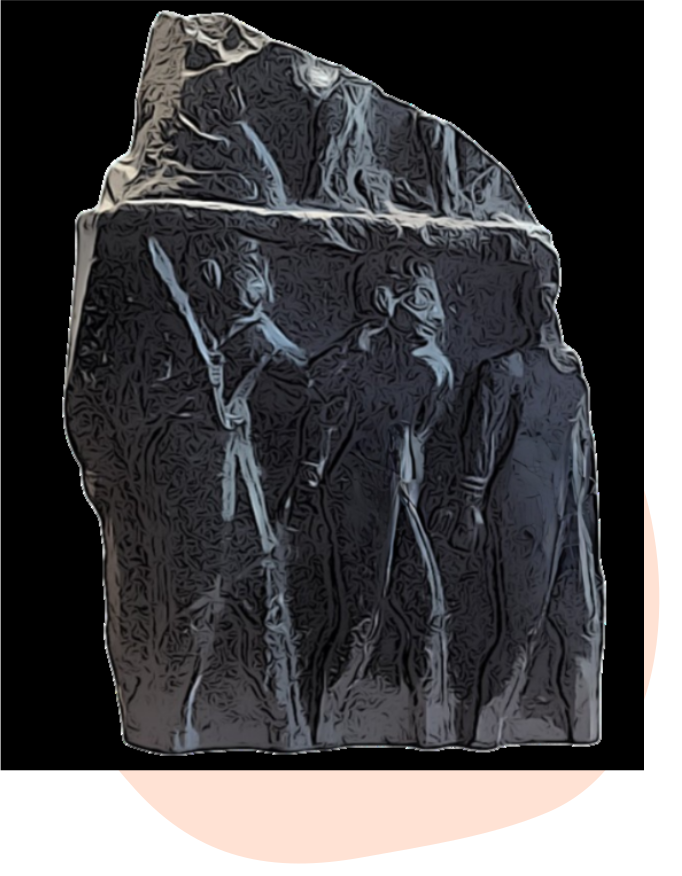
September 1939 CE
Germany invades Poland; Britain and France declare war, marking the start of the Second World War
World War II
Explore World War II +
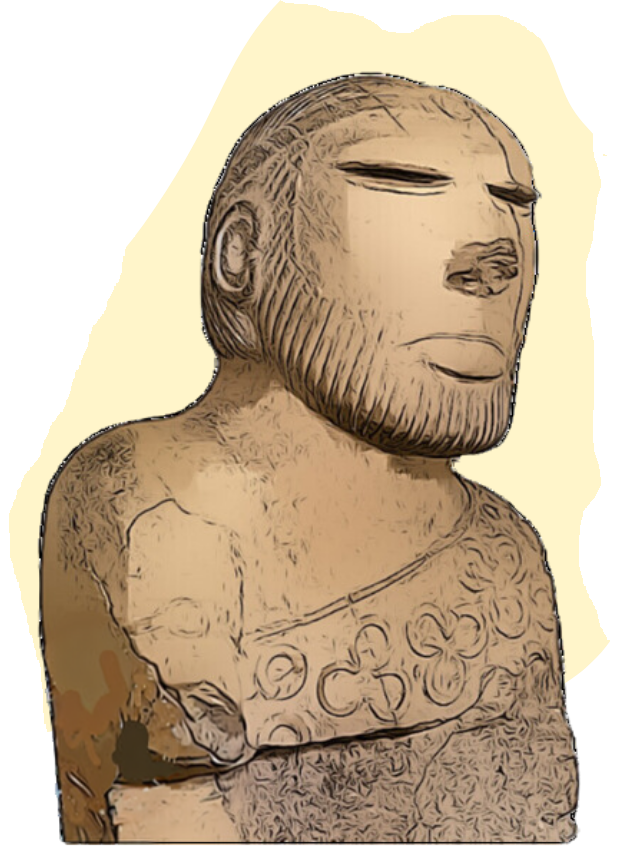
August–September 1940 CE
The Battle of Britain sees German air assaults repelled; invasion plans abandoned
World War II
Explore World War II +
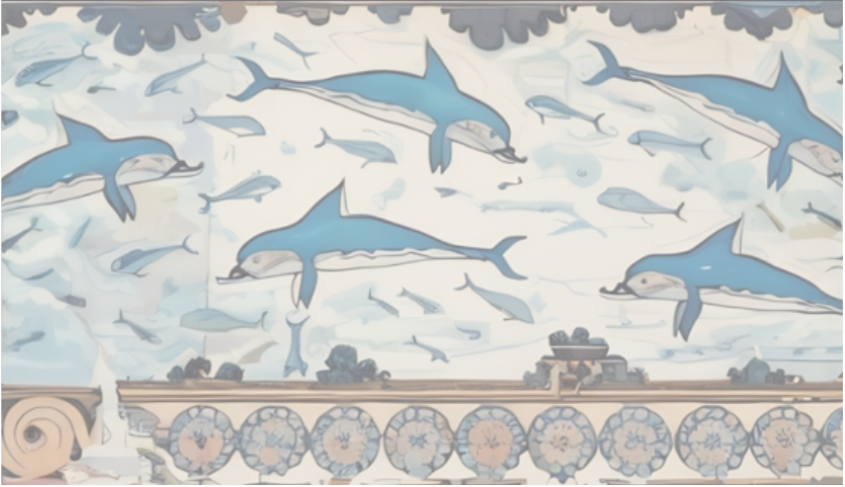
December 1941 CE
Japan attacks Pearl Harbor in Hawaii; the United States enters the war
World War II
Explore World War II +
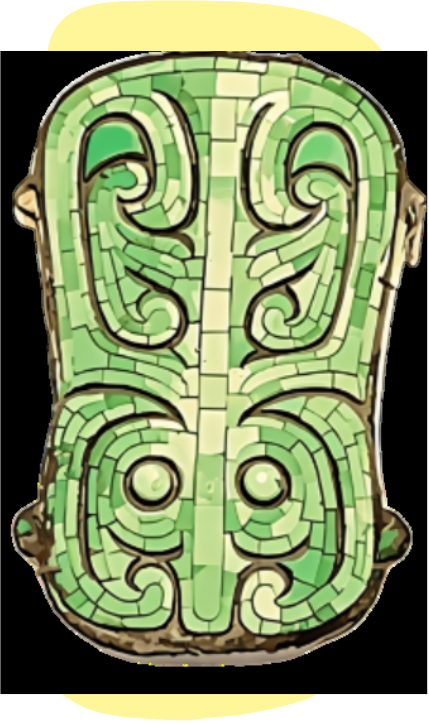
December 1941 CE
Japan attacks Pearl Harbor in Hawaii; the United States enters the war
World War II
Explore World War II +
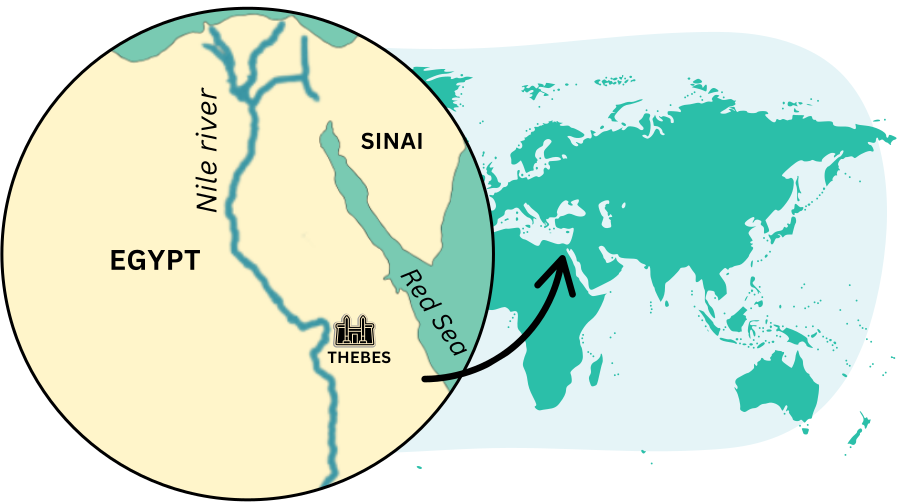
June 1944 CE
Allied forces land in Normandy on D-Day, leading to the liberation of France
World War II
Explore World War II +
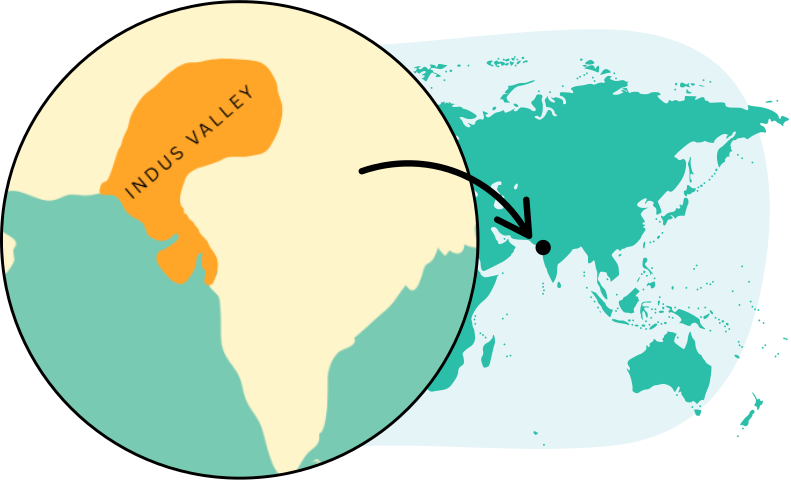
1944 CE
Iceland: Declared full independence from Denmark during World War II. Founded as a commonwealth in 930 with the Althing.
Nation Formation
1945 CE
Germany surrenders on V-E Day in May; Japan surrenders on V-J Day in August after atomic bombings
World War II
Explore World War II +
1945 CE
Germany surrenders on V-E Day in May; Japan surrenders on V-J Day in August after atomic bombings
World War II
Explore World War II +
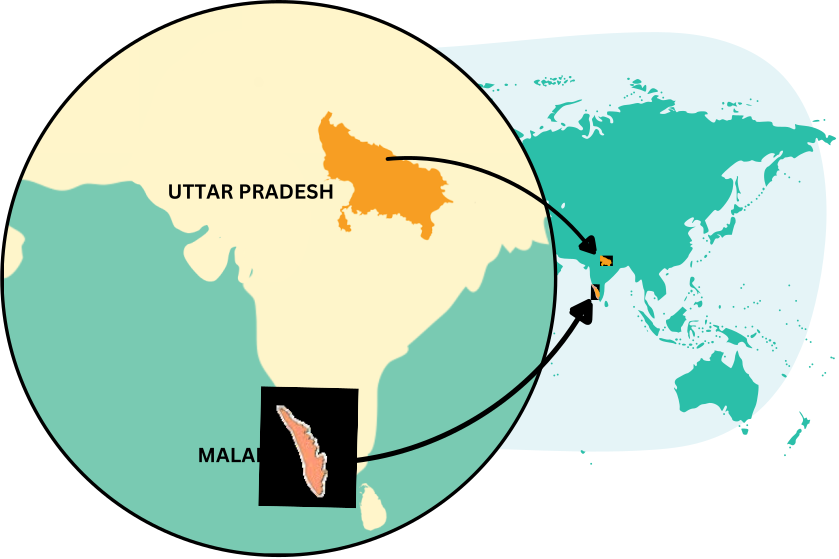
1946–2016 CE (1365–1437 AH)
Ahmed Zewail: Nobel Laureate in Chemistry — Egyptian-American chemist awarded the Nobel Prize (1999) for pioneering femtochemistry, allowing observation of chemical reactions in real time.
invention
islamic World
Explore Islamic Scientists +

1946–2016 CE (1365–1437 AH)
Ahmed Zewail: Nobel Laureate in Chemistry — Egyptian-American chemist awarded the Nobel Prize (1999) for pioneering femtochemistry, allowing observation of chemical reactions in real time.
invention
islamic World
Explore Islamic Scientists +

1947 CE
The transistor is invented, transforming electronics
Invention
4 April 1949 CE
NATO is formed between the US and other Western nations
Politics and war
29 August 1949 CE
The Soviet Union tests its first nuclear bomb, escalating the arms race
Technology
29 August 1949 CE
The Soviet Union tests its first nuclear bomb, escalating the arms race
Technology
24 June 1950 CE
The Korean War begins as North Korea invades the South with support from Stalin
Politics and war
1953 CE
The double-helix structure of DNA is described
Science
1953 CE
The double-helix structure of DNA is described
Science
1955 CE
Austria: Regained sovereignty through the Austrian State Treaty and declared neutrality. Duchy of Austria since 976; historic center of the Habsburg Empire.
Nation Formation
1955 CE
Austria: Regained sovereignty through the Austrian State Treaty and declared neutrality. Duchy of Austria since 976; historic center of the Habsburg Empire.
Nation Formation
1960 CE
Cyprus: Gained independence from the United Kingdom. Ancient Greek and Byzantine heritage followed by Ottoman and British rule.
Nation Formation
1960s CE
World population reaches approximately 3 billion
Population
1960s CE
World population reaches approximately 3 billion
Population
13 August 1961 CE
The Berlin Wall begins construction, dividing East and West Berlin
Politics and war
1962 CE
Rachel Carson publishes Silent Spring, linking pesticides to health and environmental damage
Environment
1962 CE
Rachel Carson publishes Silent Spring, linking pesticides to health and environmental damage
Environment
16 October 1962 CE
The Cuban Missile Crisis brings the US and USSR to the brink of nuclear conflict
Politics and war
1964 CE
Malta: Gained independence from the United Kingdom. Previously under the Knights Hospitaller (1530–1798) and then British rule.
Nation Formation
1964 CE
Malta: Gained independence from the United Kingdom. Previously under the Knights Hospitaller (1530–1798) and then British rule.
Nation Formation
18 March 1965 CE
Soviet cosmonaut Alexei Leonov performs the first spacewalk
Science
18 March 1965 CE
Soviet cosmonaut Alexei Leonov performs the first spacewalk
Science
1 July 1968 CE
The Nuclear Non-Proliferation Treaty is signed, committing nuclear powers to disarmament goals
Politics and war
20 July 1969 CE
Neil Armstrong becomes the first human to walk on the Moon
Science
20 July 1969 CE
Neil Armstrong becomes the first human to walk on the Moon
Science
1971 CE
The first commercial microprocessor is introduced
Technology
1973–1974 CE
The global oil crisis sparks recession and major changes in energy policies
Economy
1975 CE
Early personal computers appear for hobbyists, initiating the PC era
Technology
1975 CE
Early personal computers appear for hobbyists, initiating the PC era
Technology
1975 CE
France, Italy, Germany, Japan, Britain and the US form the Group of Six (G6) to coordinate international economic policy
Economy
1975 CE
France, Italy, Germany, Japan, Britain and the US form the Group of Six (G6) to coordinate international economic policy
Economy
1979 CE
The first World Climate Conference is held in Geneva, recognising climate change as a global issue
Environment
1989 CE
The World Wide Web is proposed at CERN, enabling the modern internet’s growth
Technology
3 October 1990 CE
East and West Germany are reunified after four decades of division
Civilisation
3 October 1990 CE
East and West Germany are reunified after four decades of division
Civilisation
3 October 1990 CE
East and West Germany are reunified after four decades of division
Civilisation
1991 CE
Russia: Established as the Russian Federation following the dissolution of the Soviet Union. Preceded by Kievan Rus’ (862), the Tsardom (1547), the Russian Empire (1721), and the USSR (1922).
Nation Formation
1991 CE
Ukraine: Declared independence from the Soviet Union following a national referendum. Preceded by Kievan Rus’, the Cossack Hetmanate (17th century), and the USSR period.
Nation Formation
1991 CE
Ukraine: Declared independence from the Soviet Union following a national referendum. Preceded by Kievan Rus’, the Cossack Hetmanate (17th century), and the USSR period.
Nation Formation
1991 CE
Belarus: Declared independence from the Soviet Union. Preceded by the Grand Duchy of Lithuania, the Polish–Lithuanian Commonwealth, and the USSR period.
Nation Formation
1991 CE
Moldova: Declared independence from the Soviet Union. Preceded by the Principality of Moldavia (14th century) and incorporation into the USSR as the Moldavian SSR.
Nation Formation
1991 CE
Moldova: Declared independence from the Soviet Union. Preceded by the Principality of Moldavia (14th century) and incorporation into the USSR as the Moldavian SSR.
Nation Formation
1991 CE
Georgia: Declared independence from the Soviet Union. Preceded by the Kingdom of Georgia (1008) and periods of Ottoman, Persian, and Russian control.
Nation Formation
1991 CE
Armenia: Declared independence from the Soviet Union. Preceded by the Kingdom of Urartu (9th century BCE), the Kingdom of Armenia (331 BCE), and the USSR period.
Nation Formation
1991 CE
Armenia: Declared independence from the Soviet Union. Preceded by the Kingdom of Urartu (9th century BCE), the Kingdom of Armenia (331 BCE), and the USSR period.
Nation Formation
1991 CE
Azerbaijan: Declared independence from the Soviet Union. Preceded by ancient Caucasian Albania, Persian empires, a brief 1918–1920 republic, and the USSR period.
Nation Formation
1991 CE
Slovenia: Declared independence from Yugoslavia. Historically part of Austria-Hungary until 1918.
Nation Formation
1991 CE
Slovenia: Declared independence from Yugoslavia. Historically part of Austria-Hungary until 1918.
Nation Formation
1991 CE
Croatia: Declared independence from Yugoslavia; internationally recognized in 1992. Preceded by the medieval Kingdom of Croatia (925).
Nation Formation
1991 CE
North Macedonia: Declared independence from Yugoslavia. Preceded by ancient Macedon and later Slavic settlement from the 6th century.
Nation Formation
1991 CE
North Macedonia: Declared independence from Yugoslavia. Preceded by ancient Macedon and later Slavic settlement from the 6th century.
Nation Formation
1992 CE
Bosnia: Declared independence during the breakup of Yugoslavia. Preceded by the medieval Bosnian Banate and Kingdom.
Nation Formation
1992 CE
At the Rio Earth Summit, governments adopt the UN Framework Convention on Climate Change (UNFCCC)
Environment
1993 CE
Czech Republic: Formed after the peaceful dissolution of Czechoslovakia (the Velvet Divorce). Preceded by the Kingdom of Bohemia (9th century).
Nation Formation
1993 CE
Czech Republic: Formed after the peaceful dissolution of Czechoslovakia (the Velvet Divorce). Preceded by the Kingdom of Bohemia (9th century).
Nation Formation
1993 CE
Slovakia: Became independent after the Velvet Divorce, peacefully separating from the Czech Republic. Preceded by Great Moravia (9th century) and later Czechoslovakia.
Nation Formation
1997 CE
The Kyoto Protocol is adopted, committing industrialised nations to reduce carbon emissions (2008–2012 targets)
Environment
1997 CE
The Kyoto Protocol is adopted, committing industrialised nations to reduce carbon emissions (2008–2012 targets)
Environment

2003 CE
The Human Genome Project is declared complete
Science
2006 CE
Montenegro: Declared independence from the State Union of Serbia and Montenegro. Historic principality and kingdom; international recognition in 1878.
Nation Formation
2006 CE
Montenegro: Declared independence from the State Union of Serbia and Montenegro. Historic principality and kingdom; international recognition in 1878.
Nation Formation
2006 CE
Serbia: Became independent after the State Union with Montenegro ended. Preceded by a medieval Serbian kingdom and empire (12th–14th centuries) and the Yugoslav period.
Nation Formation
2008 CE
Kosovo (partially recognized): Declared independence from Serbia. Historically part of medieval Serbia and later the Ottoman Empire; 20th-century Yugoslav period.
Nation Formation
2008 CE
Kosovo (partially recognized): Declared independence from Serbia. Historically part of medieval Serbia and later the Ottoman Empire; 20th-century Yugoslav period.
Nation Formation